What Is a Round Light Diffuser? The Complete Guide to Choosing the Right One for Your Space
Introduction
Walk into any well-lit room and there is a good chance you are looking at a round light diffuser without realizing it. That soft, even glow spreading across the ceiling usually comes down to one simple component doing its job quietly, with no glare and no harsh shadows. A round light diffuser is the panel that sits over an LED fixture. It spreads light evenly instead of letting it beam out in one direction. It sounds like a small detail, but it changes how an entire room feels.
If you have ever been in a space where the lighting felt sharp, uncomfortable, or just off, the diffuser (or lack of one) was probably the reason. In this guide, we will break down what a round light diffuser actually does and how it compares to a round plastic light diffuser. We will also cover why it matters for ceiling applications and how to pick the right diffuser light cover for your project.
What Is a Round Light Diffuser?
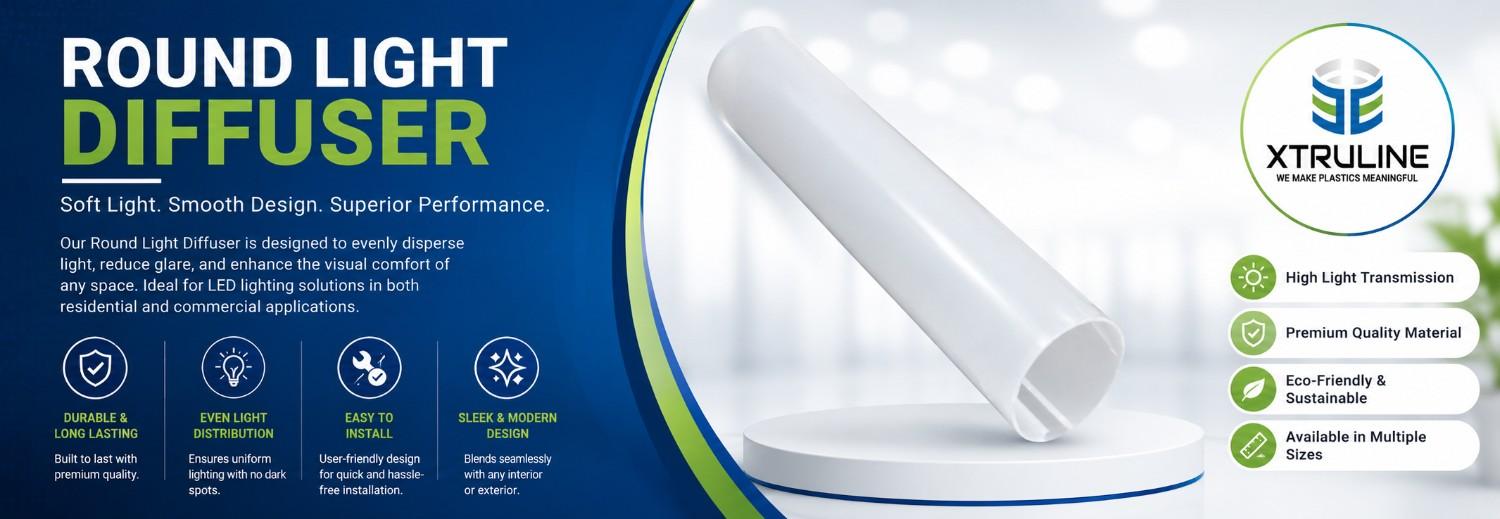
A round light diffuser is a circular cover that fits over an LED light source to scatter the light coming out of it. Manufacturers usually make it from a translucent or opal material. Instead of a single bright point of light, you get a wide, uniform glow across the entire fixture. This is what makes modern LED ceiling lights look clean and professional instead of harsh and clinical.
The science behind it is simple. LEDs produce very concentrated, directional light. Without something to break that light up, you get hotspots, glare, and uneven brightness. A diffuser scatters the light particles as they pass through, so the output looks soft and consistent from edge to edge. This is why round light diffusers have become the standard choice in offices, retail stores, hospitals, and homes where comfortable lighting matters.
Round Plastic Light Diffuser vs Other Materials
When people search for a round plastic light diffuser, they are usually comparing it against glass or acrylic alternatives. Plastic, particularly polycarbonate and PMMA (acrylic), has become the preferred material for a few practical reasons.
First, plastic diffusers are lightweight, which makes installation faster and safer, especially for ceiling-mounted fixtures. Second, they resist impact far better than glass, so shipping, installation, and day-to-day use carry less risk of cracking. Third, manufacturers can engineer plastic with specific light transmission and diffusion properties. This lets them fine-tune exactly how much glare reduction and brightness a panel delivers.
Types of Round Plastic Light Diffusers
A quality round plastic light diffuser typically falls into one of these categories:
- Opal or milky white diffusers: offer maximum light scattering with a soft, even glow, ideal for general ambient lighting.
- Prismatic diffusers: use a textured pattern to redirect light angles, often chosen where higher light output is still needed.
- Clear diffusers with micro-texture: provide subtle diffusion while allowing more light through, useful in spaces that need brighter illumination.
Choosing between these depends on the fixture’s purpose. A conference room might want a softer opal finish, while a warehouse aisle might prioritize brightness with a prismatic option.
Why Diffuser Light Cover Quality Actually Matters
It is tempting to think of a diffuser light cover as just a plastic sheet. In reality, material quality directly affects three things: light output, durability, and appearance over time.
Cheaper diffuser covers tend to yellow with heat exposure, becoming brittle and discolored within a year or two. A well-manufactured diffuser, on the other hand, uses UV-stabilized, heat-resistant materials, so it maintains its clarity and color consistency for years. This matters more than most people expect, because a yellowing diffuser can noticeably reduce light output and make an entire ceiling look dated.
Another factor is the diffusion efficiency rating, sometimes called light transmittance. A diffuser that scatters too much light can end up dimming the fixture more than necessary, forcing you to use higher wattage LEDs to compensate. The right balance gives you soft, glare-free light without sacrificing brightness.
Ceiling Light Cover Applications
The most common use case for round diffusers is as a ceiling light cover for recessed or surface-mounted LED panels. In residential settings, these covers are popular in kitchens, bedrooms, and living rooms, where homeowners prefer a clean, minimal look over exposed bulbs or visible LED strips.
In commercial settings, ceiling light covers serve a slightly different purpose. Offices need consistent lighting across large open floors without glare on computer screens. Retail stores use diffused ceiling lighting to make products look natural rather than washed out or overly harsh. Hospitals and clinics rely on diffused light covers to create a calmer, less clinical atmosphere for patients.
When selecting a ceiling light cover, it helps to think about three things: the size and shape of the existing fixture, and the desired brightness level. You should also consider the installation environment, since humidity, temperature, and dust exposure all affect material choice.
How to Choose the Right Round Light Diffuser
If you are sourcing round light diffusers for a project, whether a single room or a bulk manufacturing order, here are a few practical points worth checking before you commit:
- Material grade: Look for UV-stabilized polycarbonate or PMMA rather than generic PVC, especially for spaces exposed to sunlight or heat.
- Diffusion pattern: Match the pattern (opal, prismatic, or micro-textured) to the brightness and glare requirements of the space.
- Fit and dimensions: Round diffusers need to match the exact diameter of the fixture housing, so precise measurements matter more than expected.
- Fire and safety ratings: For commercial installations, check that the diffuser meets relevant fire retardancy standards.
- Long-term clarity: Ask about anti-yellowing treatment, since this determines how the product will look several years down the line.
A good supplier should be able to walk you through these specifications instead of just quoting a price. Extrusion quality, in particular, plays a big role in how consistent the diffusion is across the entire sheet. It is worth asking about the manufacturing process and quality control, not just the finished look.
Installation Tips Worth Knowing
Even the best round light diffuser will underperform if you install it incorrectly. A few practical tips can save you rework later. Always check that the diffuser sits flush against the fixture housing, since gaps at the edges create visible light leaks and shadow lines around the rim. If the diffuser snaps or clips into place, make sure the clips fully engage on all sides rather than just the two most accessible points. Uneven pressure can cause warping over time in warmer environments.
For larger commercial installations, it also helps to install a small batch first and observe them under actual operating conditions for a few days before committing to a full order. Heat buildup, dust accumulation, and color consistency across multiple units are things you often cannot judge from a single sample. This small extra step tends to save both cost and hassle down the line, particularly for facilities managers handling ceiling retrofits across many rooms at once.
Conclusion
A round light diffuser might seem like a minor component, but it shapes how comfortable, professional, and consistent a space feels under LED lighting. The material quality and diffusion pattern make all the difference between lighting that just works and lighting that actually feels right. This holds true whether you are choosing a round plastic light diffuser for a single home renovation or sourcing diffuser light covers for a large commercial ceiling installation.
Getting this detail correct is a small investment that pays off every single day you switch on the lights. At Xtruline, this is exactly the kind of detail we focus on when manufacturing diffuser panels, so every project gets lighting that looks right from day one. It stays that way for years.
FAQs
1. What is the difference between a light diffuser and a light cover?
A light diffuser specifically scatters and softens light output, while a light cover can refer more broadly to any panel protecting or covering a fixture. Most modern ceiling light covers are designed to diffuse light as well.
2. Can a round plastic light diffuser reduce energy costs?
Indirectly, yes. A good diffuser improves light distribution so you can often use a lower wattage LED to achieve the same perceived brightness, which can lower energy use over time.
3. How long does a round light diffuser typically last?
A quality UV-stabilized diffuser can last 8 to 10 years or more without significant yellowing or brittleness, depending on heat exposure and usage conditions.
4. Are round light diffusers suitable for outdoor use?
Some are, but only if specifically rated for outdoor exposure with UV and weather resistance. Standard indoor diffusers are not built to handle direct sunlight or moisture long term.
5. What size round light diffuser do I need for my ceiling fixture?
It depends entirely on your existing fixture housing diameter. Measuring the current cover or the fixture opening before ordering is the most reliable way to get an exact fit.