How to Choose a Strip Light Cover for LEDs | Xtruline
Introduction
LED lighting has become a popular choice for homes, offices, retail stores, commercial interiors, exhibitions, and industrial spaces. But installing an LED strip alone does not always provide the clean appearance or controlled light output that a modern project needs. This is where the right strip light cover can make a practical difference.
A well-designed cover can protect LED strips from dust and accidental contact while also helping create smoother, more comfortable illumination. Depending on the application, it can also support the overall appearance of a lighting installation by concealing the individual LED points.
Xtruline develops plastic extrusion solutions for applications where dimensional consistency, appearance, and functional performance matter. Its expertise can be useful when businesses require lighting components designed around specific project requirements.
What Is a Strip Light Cover?
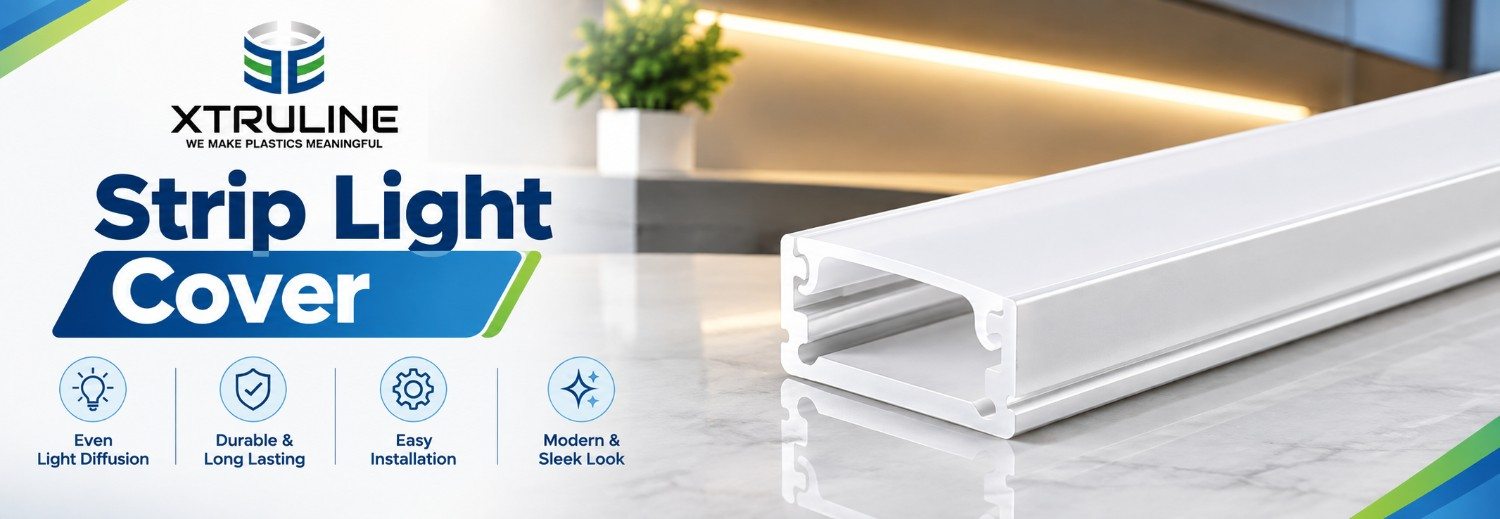
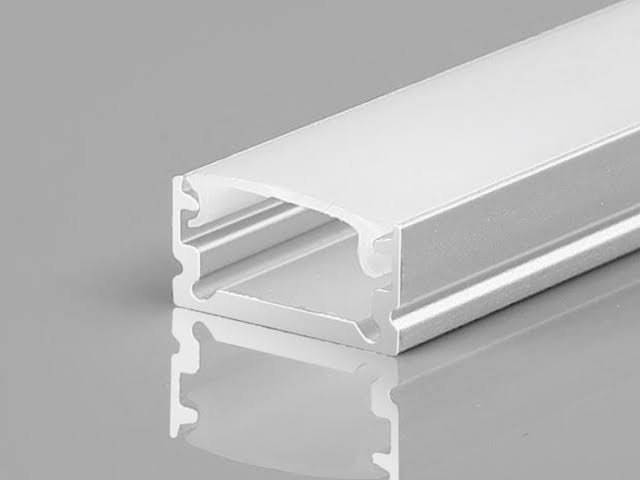
A strip light cover is a protective and light-managing component placed over an LED strip. It is commonly used with LED channels, housings, profiles, and custom lighting assemblies.
The cover can serve several purposes at once. It may protect the LED strip from dust and minor physical contact, soften harsh points of light, and provide a more finished appearance. The exact performance depends on the material, surface finish, thickness, profile design, and LED configuration.
For applications where visible LED dots are undesirable, a diffusing cover can help spread the emitted light more evenly. This is particularly useful in architectural lighting, cabinets, signage, furniture, display units, and decorative installations.
Why Does an LED Strip Need a Cover?
LED strips are compact and flexible, but their exposed construction can create practical challenges. Individual LED chips may appear as bright spots, especially when the strip is viewed directly. The strip may also be exposed to dust, handling, or other environmental factors.
A suitable cover addresses some of these concerns while maintaining the intended lighting effect.
The main benefits include:
1. Improved Light Distribution
A diffusing material can scatter light and reduce the visibility of individual LED points. Instead of seeing a series of concentrated bright spots, users can experience a softer and more continuous appearance.
The result depends on factors such as LED spacing, strip density, diffuser material, installation depth, and optical properties.
2. Better Protection
A cover provides an additional physical layer around the lighting assembly. This can help reduce exposure to dust and accidental contact during normal use.
For demanding environments, the complete lighting system should be selected according to the required protection level rather than relying on the cover alone.
3. Cleaner Appearance
Exposed LED strips can sometimes look unfinished. A properly fitted cover creates a more integrated appearance and can complement the surrounding architecture, furniture, signage, or display structure.
4. More Comfortable Lighting
Direct LED points can appear harsh when viewed from certain angles. A suitable diffuser can soften the appearance and make the lighting more comfortable for applications where people are frequently exposed to the light source.
Types of LED Strip Light Covers
Not every lighting project requires the same type of cover. Selecting the right construction starts with understanding the application.
LED Strip Light Plastic Cover
An led strip light plastic cover is commonly selected when designers need a lightweight, practical, and customizable component. Plastic materials can be manufactured in different shapes, finishes, dimensions, and optical characteristics.
Depending on the application, the cover may be clear, translucent, frosted, opal, or specially engineered to provide a particular visual effect.
For custom projects, extrusion technology can also help achieve consistent cross-sectional dimensions over longer lengths.
LED Strip Light Diffuser Cover
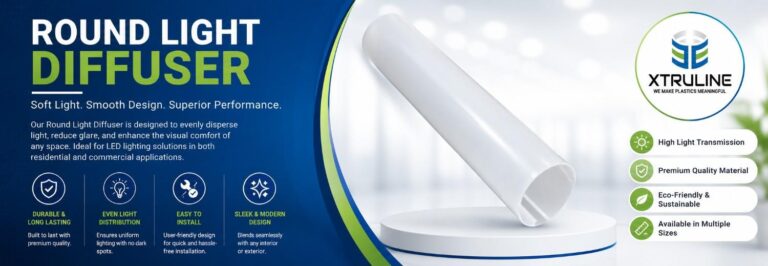
An led strip light diffuser cover is designed primarily to manage the appearance and distribution of light. Diffusing surfaces scatter light rather than allowing it to pass through in the same concentrated manner as a clear cover.
This makes diffuser covers useful for linear lighting where smooth illumination is more important than maximum direct brightness.
The correct diffuser should be selected alongside the LED strip rather than treated as a completely separate component. LED density, spacing, power, color temperature, installation depth, and desired brightness can all influence the final result.
How to Select the Right Cover
Choosing the right component is easier when the complete lighting application is considered.
Consider LED Density
LED strips are available in different LED densities. A densely populated strip generally creates more continuous light, while widely spaced LEDs may make individual points more visible.
If the lighting system uses a lower-density strip, the distance between the LED source and diffuser may become especially important.
Check the Required Light Effect
Ask whether the project requires maximum brightness, soft illumination, or a balance between the two.
Clear covers generally preserve more direct light, while diffusing materials can create a smoother visual effect. The appropriate choice depends on the design objective.
Match the Profile
The cover should fit securely with the selected LED channel or profile. A poor dimensional match can result in loose fitting, installation difficulties, or an inconsistent appearance.
For customized lighting systems, manufacturers may develop profiles and covers according to specific dimensional requirements.
Consider the Environment
Indoor decorative lighting and demanding commercial or industrial installations may have very different requirements.
Before selecting a material, consider temperature, humidity, dust exposure, cleaning practices, UV exposure, and mechanical contact. Material selection should be based on the actual operating environment.
Think About Long-Term Maintenance
A lighting installation should not only look good on the day it is installed. The cover should also be practical to clean, inspect, remove, or replace when required.
Easy maintenance can be particularly valuable in commercial spaces, retail displays, offices, and architectural installations where lighting operates for extended periods.
Where Are LED Covers Commonly Used?
These components can be used across a wide range of lighting applications, including:
- Under-cabinet lighting
- Retail displays
- Architectural lighting
- Furniture lighting
- Office interiors
- Exhibition displays
- Signage
- Shelving systems
- Decorative wall lighting
- Commercial interiors
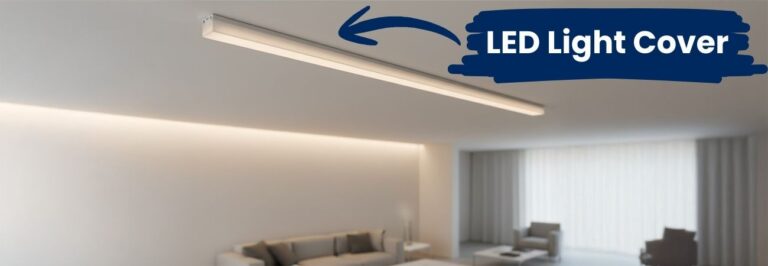
- Linear ceiling lighting
The ideal material and profile depend on the specific installation and required optical performance.
Why Custom Extrusion Can Matter
Standard components work well for many projects, but specialized applications may require a different shape, dimension, finish, or fit.
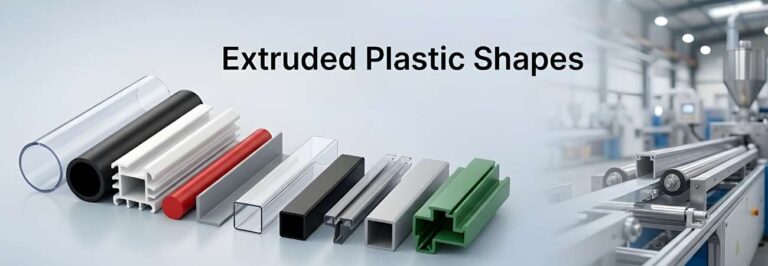
Custom extrusion allows manufacturers to produce long, continuous plastic components with a consistent profile. This can be useful when a lighting system requires a particular cover geometry or needs to integrate with an existing housing.
For businesses developing new lighting products, custom profiles can also help create a more purpose-built solution instead of modifying an unsuitable standard component.
Xtruline focuses on custom plastic extrusion solutions designed around application-specific requirements. From profile geometry to material considerations, the objective is to create components that work with the overall product design.
Why Choose Xtruline?
Choosing a manufacturer is about more than finding a component that looks suitable. Consistent dimensions, material selection, profile design, production capabilities, and communication during development can all influence the final result.
Xtruline provides custom plastic profile and extrusion solutions for businesses seeking components tailored to their applications. Its capabilities can support projects where standard plastic covers do not provide the required dimensions or design.
If you are developing a new LED lighting product or need a customized cover for an existing system, discussing the application requirements with an experienced extrusion manufacturer can help you identify a practical approach.
Conclusion
A well-selected cover can improve the appearance, protection, and light distribution of an LED installation. The right solution depends on more than the physical size of the LED strip. LED density, optical requirements, installation depth, environmental conditions, profile compatibility, and maintenance should all be considered.
Whether the project requires a simple protective component or a customized diffusing profile, selecting the material and design based on the real application can lead to a more reliable and visually consistent lighting solution.
For businesses looking for customized plastic extrusion solutions for LED lighting applications, Xtruline can help develop profile-based solutions according to specific project requirements.
FAQs
It protects the LED strip, improves the appearance of the installation, and can help soften and distribute light more evenly.
A clear cover allows more direct light to pass through, while a diffused cover scatters light to create a softer and more uniform appearance.
Yes. Plastic extrusion technology can be used to develop covers with customized dimensions, shapes, finishes, and material characteristics for specific applications.
Consider LED density, brightness requirements, installation depth, desired light appearance, environmental conditions, and compatibility with the LED profile.
Yes. Plastic covers can be used in commercial applications when the selected material and design are appropriate for the operating environment and required performance.