How Plastic Extrusion Services Support Modern Industrial Applications | Xtruline
Introduction
Modern industries need plastic components that are accurate, durable, lightweight, and suitable for specific applications. From construction and lighting to automotive, electrical, furniture, and industrial equipment, customized plastic parts have become an important part of everyday manufacturing. This is where plastic extrusion services provide a practical and flexible solution.
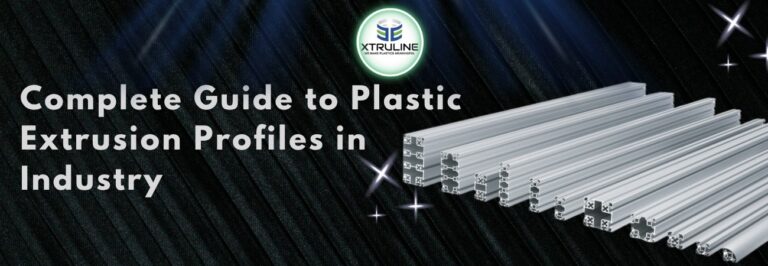
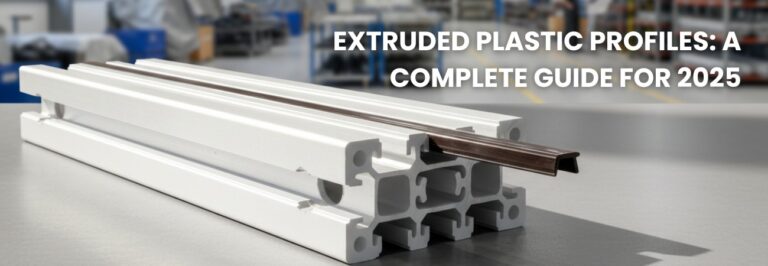
Plastic extrusion is a continuous manufacturing process in which plastic material is heated, shaped through a specially designed die, and cooled to create a profile with a consistent cross-section. Depending on the application, manufacturers can produce channels, tubes, trims, seals, sheets, profiles, and other customized shapes.
For businesses looking for dependable plastic components, choosing the right manufacturing partner can make a significant difference in product quality, production efficiency, and long-term performance.
What Are Plastic Extrusion Services?
Plastic extrusion services involve the design and production of continuous plastic products according to specific dimensional and functional requirements. The process generally starts with selecting a suitable polymer. The material is then heated until it reaches a workable state and pushed through a precision die.
After exiting the die, the profile is cooled, calibrated, and cut or finished according to the customer’s requirements.
A major advantage of extrusion is its ability to produce consistent profiles over long production runs. This makes it suitable for applications where dimensional accuracy and repeatability are important.
Depending on the project, materials such as PVC, polycarbonate, ABS, acrylic, polyethylene, and other engineering plastics may be considered.
Why Choose Custom Extrusion?
Not every industrial application can be solved with an off-the-shelf component. A product may require a particular width, thickness, shape, color, surface finish, or mechanical property.
Custom extrusion allows manufacturers to develop profiles around the actual requirements of the application.
For example, a lighting company may need a diffuser profile designed to fit a particular LED assembly. A construction application may require a rigid PVC section with specific dimensions. Similarly, an industrial machine may need a protective plastic channel designed around an existing component.
This flexibility helps businesses reduce unnecessary modifications and create components that integrate more effectively into their final products.
The Role of Plastic Extrusion Manufacturers
Experienced plastic extrusion manufacturers contribute more than production capacity. They can assist with material selection, profile design, tooling, prototyping, dimensional control, and finishing.
A reliable manufacturer should understand how the intended application affects material and profile selection. Factors such as temperature, impact resistance, UV exposure, chemical contact, flexibility, transparency, and load requirements may influence the final design.
Quality control is equally important. Consistent dimensions, proper cooling, accurate tooling, and controlled production conditions help ensure that every batch meets the required specifications.
For businesses developing a new product, working with an experienced extrusion partner from the design stage can also help identify potential manufacturing challenges before full-scale production begins.
Understanding PVC Profile Extrusion
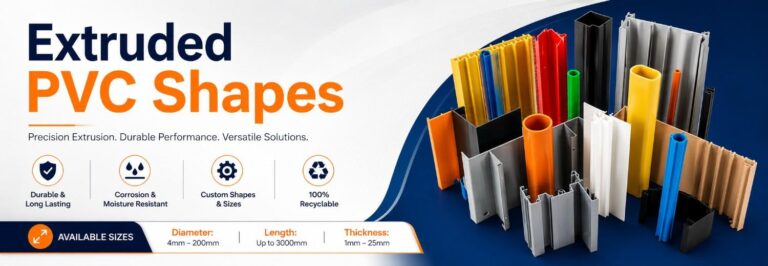
PVC is widely used for profiles because it offers a useful combination of durability, chemical resistance, processability, and cost efficiency. PVC profile extrusion can be used to manufacture sections for construction, electrical systems, furniture, windows, doors, protective applications, and industrial assemblies.
PVC formulations can also be adapted according to application requirements. Depending on the formulation and design, profiles can be produced in different colors, finishes, hardness levels, and dimensions.
The right PVC profile depends on where and how it will be used. Indoor decorative applications may have different requirements from outdoor profiles exposed to sunlight, moisture, and temperature variations.
Applications Across Different Industries
The versatility of extrusion makes it useful across numerous sectors.
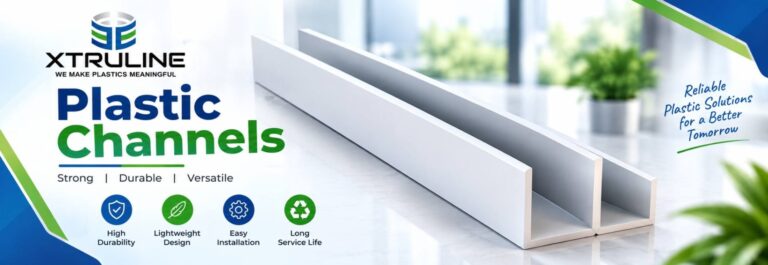
In construction, extruded profiles can be used for trims, channels, seals, framing components, and protective sections. Lighting manufacturers use plastic profiles and diffusers for LED fixtures and architectural lighting systems.
In electrical and electronics applications, plastic sections can provide insulation, protection, spacing, or cable management. Industrial equipment manufacturers may use custom tubes, guides, covers, and protective profiles.
Furniture manufacturers can also use extruded components for edging, trims, channels, and structural or decorative elements.
Because the process can be customized, the same fundamental manufacturing technique can support very different industries and product requirements.
How to Select the Right Plastic Extrusion Supplier
Choosing a reliable plastic extrusion supplier requires more than comparing prices. Businesses should evaluate technical capabilities, material options, customization support, quality control, production capacity, and communication.
Start by clearly defining the profile dimensions and intended application. Provide drawings, samples, CAD files, or dimensional specifications whenever possible. Discuss the expected operating environment and performance requirements with the supplier.
It is also useful to ask about tooling, prototypes, tolerances, minimum order quantities, finishing options, packaging, and delivery schedules.
A supplier that understands the complete requirement can help reduce production problems and improve the consistency of the final product.
Why Partner With Xtruline?
Xtruline provides customized plastic extrusion solutions designed around diverse industrial requirements. From profiles and tubes to sheets and specialized extruded components, the focus is on delivering practical solutions that match application-specific needs.
The right combination of material selection, profile design, tooling, and production control can help businesses achieve reliable results without compromising on functionality.
Whether you are developing a new product or looking for a dependable source for an existing plastic component, Xtruline can support your extrusion requirements with a customization-focused approach.
Conclusion
Plastic extrusion continues to be an efficient manufacturing method for producing consistent and customized plastic components. Its ability to accommodate different materials, shapes, dimensions, colors, and finishes makes it suitable for a wide range of industries.
From specialized profiles to PVC sections and protective channels, the success of an extrusion project depends heavily on choosing the right design, material, process, and manufacturing partner.
If you are searching for reliable extrusion solutions tailored to your application, Xtruline can help turn your profile requirements into practical manufactured products.
FAQs
They are used to manufacture continuous plastic products such as profiles, tubes, channels, trims, sheets, and customized sections for different industries.
Common materials include PVC, polycarbonate, ABS, acrylic, polyethylene, and various engineering plastics. Material selection depends on the application’s performance requirements.
PVC profile extrusion is a process used to produce continuous profiles from PVC material. It is commonly used in construction, electrical, furniture, lighting, and industrial applications.
Consider technical expertise, customization capabilities, material options, tooling support, quality control, production capacity, and the supplier’s ability to meet your dimensional and application requirements.
Yes. Xtruline focuses on customized plastic solutions, including profiles, tubes, sheets, and other extruded components designed for specific application requirements.