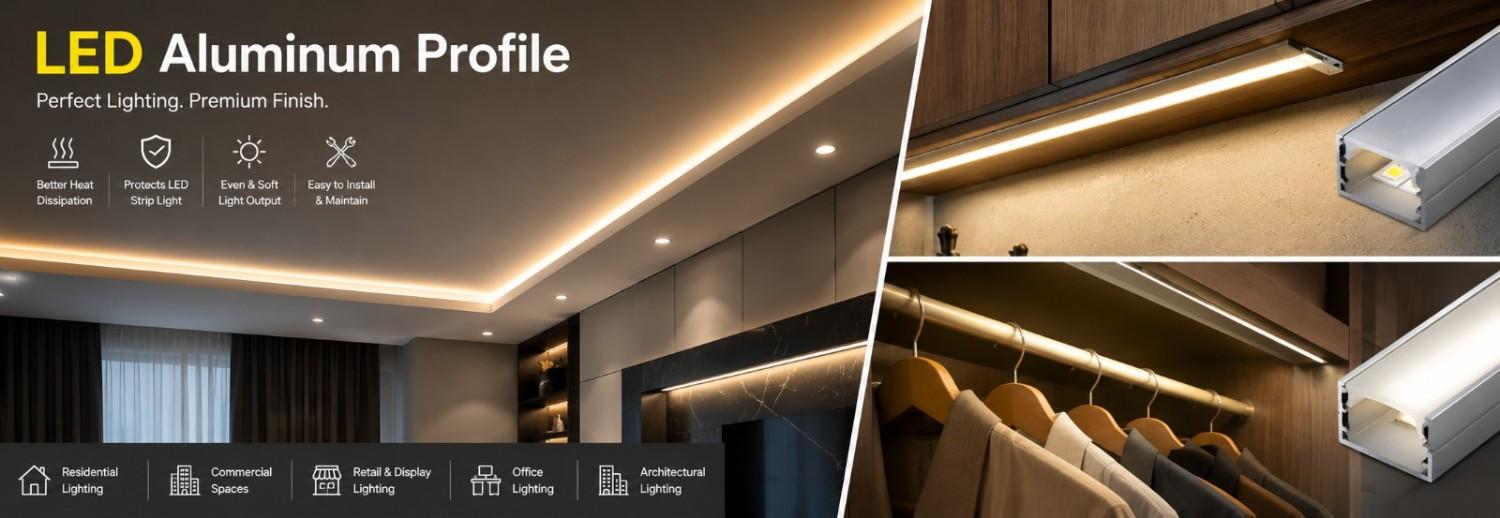
LED Aluminum Profile: The Smart Solution For Modern LED Lighting Installations
Introduction
LED lighting has transformed the way homes, offices, retail spaces, and commercial buildings are illuminated. While LED strip lights are popular for their energy efficiency and flexibility, achieving a professional and long-lasting lighting setup requires more than just installing the strips. This is where an LED Aluminum Profile plays a crucial role.
An LED Aluminum Profile not only enhances the appearance of LED strip lighting but also improves heat dissipation, protects the LEDs, and ensures consistent lighting performance over time. Whether you are designing architectural lighting, under-cabinet illumination, retail displays, or decorative lighting solutions, aluminum profiles are an essential component for a polished and durable installation.
In this blog, we will explore everything you need to know about LED Aluminum Profiles, their benefits, applications, types, and why they have become a preferred choice for modern lighting projects.
What is an LED Aluminum Profile?
An LED Aluminum Profile is a specially designed aluminum housing used to hold and protect LED strip lights. It typically consists of an aluminum channel, a diffuser cover, mounting accessories, and end caps.
The profile acts as a protective casing while helping to dissipate heat generated by the LED strips. This not only extends the lifespan of the LEDs but also improves the overall aesthetic appeal of the lighting installation.
Available in various shapes and sizes, these profiles can be surface-mounted, recessed, suspended, or corner-mounted depending on the application requirements.
Why Use an LED Aluminum Profile?
Many people install LED strip lights directly onto surfaces, but this approach often leads to reduced lifespan, uneven lighting, and a less professional appearance.
Using an LED Aluminum Profile provides several advantages:
1. Superior Heat Management
Heat is one of the primary factors affecting LED performance and longevity. Aluminum is an excellent conductor of heat, helping to dissipate excess heat away from the LED strip.
Benefits include:
- Extended LED lifespan
- Consistent brightness
- Reduced risk of overheating
- Improved energy efficiency
2. Professional Appearance
An LED profile creates a clean and seamless lighting finish. It conceals the LED strip and wiring, making installations look more sophisticated and organized.
3. Enhanced Protection
The profile protects LED strips from:
- Dust
- Moisture
- Physical damage
- Accidental impacts
This protection is especially important in commercial and industrial environments.
4. Better Light Diffusion
Most profiles include diffuser covers that soften the light output and reduce visible LED hotspots.
Advantages of diffusers:
- Uniform illumination
- Reduced glare
- Improved visual comfort
- Premium lighting effect
Key Components of an LED Aluminum Profile
Understanding the components helps in selecting the right profile for your project.
Aluminum Channel
The aluminum body serves as the main housing structure and heat sink.
Diffuser Cover
Usually made from polycarbonate or acrylic, the diffuser helps distribute light evenly.
End Caps
End caps provide a finished appearance and prevent dust from entering the profile.
Mounting Clips
These clips secure the profile to walls, ceilings, furniture, or other surfaces.
Types of LED Aluminum Profiles
There are various profile designs available to suit different installation requirements.
Surface-Mounted Profiles
These are installed directly onto flat surfaces.
Common applications:
- Kitchen cabinets
- Shelves
- Display units
- Workstations
Recessed Profiles
Installed inside grooves or channels, recessed profiles offer a flush finish.
Ideal for:
- Furniture
- Ceilings
- Walls
- Architectural lighting
Corner Profiles
Designed for installation at 90-degree angles.
Perfect for:
- Corners of rooms
- Display cabinets
- Retail shelving
- Under-cabinet lighting
Suspended Profiles
These profiles hang from ceilings using suspension kits.
Widely used in:
- Offices
- Conference rooms
- Commercial buildings
- Modern interior designs
Flexible Profiles
Suitable for curved surfaces and creative lighting applications.
Applications include:
- Decorative lighting
- Architectural accents
- Custom designs
Applications of LED Aluminum Profiles
LED Aluminum Profiles are versatile and suitable for a wide range of projects.
Residential Lighting
Homeowners use profiles for:
- Under-cabinet kitchen lighting
- Staircase illumination
- Wardrobe lighting
- False ceiling lighting
- Living room accent lighting
Commercial Spaces
Businesses benefit from professional lighting solutions in:
- Retail stores
- Shopping malls
- Hotels
- Restaurants
- Offices
Architectural Lighting
Architects and designers utilize profiles to create visually appealing lighting effects in modern buildings.
Industrial Installations
Industrial facilities use protected LED lighting systems for:
- Production areas
- Warehouses
- Workstations
- Machinery lighting
Display and Showcase Lighting
LED profiles help highlight products and displays while maintaining a clean and premium appearance.
LED Extrusion Profile: A Popular Choice for Modern Lighting
The term LED extrusion profile is often used interchangeably with LED aluminum profile. These extruded aluminum channels are manufactured through a specialized extrusion process that ensures durability, precision, and excellent heat dissipation.
Advantages of LED extrusion profiles include:
- Lightweight construction
- Corrosion resistance
- High strength
- Easy installation
- Attractive appearance
Because of these benefits, LED extrusion profiles are widely used in both residential and commercial projects.
Aluminum Channel for LED Lights: Why It Matters
An aluminum channel for LED lights provides the structural support necessary for reliable LED strip installations.
Without an aluminum channel:
- Heat buildup can reduce LED lifespan.
- Adhesive backing may fail over time.
- LED strips may appear uneven.
- Dust and physical damage can affect performance.
Using a high-quality aluminum channel ensures that LED lighting remains efficient, attractive, and durable for years.
LED Strip Light Housing for Better Performance
A proper LED strip light housing protects delicate LED components while enhancing light quality.
Benefits of LED strip light housing include:
Improved Durability
The housing shields LED strips from environmental factors and accidental damage.
Enhanced Safety
Proper housing reduces exposure to electrical components.
Better Aesthetics
A housing system conceals wires and installation hardware for a cleaner appearance.
Consistent Lighting
Diffusers integrated into the housing provide smooth and uniform illumination.
How to Choose the Right LED Aluminum Profile
Selecting the appropriate profile depends on several factors.
Consider Installation Location
Determine whether the profile will be installed:
- Indoors
- Outdoors
- On ceilings
- On walls
- Inside furniture
Check LED Strip Width
Ensure the channel width matches the LED strip dimensions.
Choose the Right Diffuser
Common diffuser options include:
- Clear
- Frosted
- Opal
Frosted diffusers are often preferred for reducing hotspots.
Evaluate Heat Dissipation Needs
High-power LED strips require larger aluminum profiles for effective cooling.
Match Design Requirements
Choose a profile shape that complements the architectural or interior design style.
Installation Tips for LED Aluminum Profiles
To achieve optimal performance, follow these installation best practices:
Measure Carefully
Accurate measurements help avoid installation errors and material waste.
Use Quality Mounting Accessories
Secure mounting ensures long-term stability.
Clean Surfaces Before Installation
Removing dust and grease improves adhesion and mounting effectiveness.
Allow Proper Ventilation
Good airflow supports efficient heat dissipation.
Test Before Final Assembly
Always test LED strips before securing diffuser covers and end caps.
Future Trends in LED Aluminum Profiles
As LED technology continues to evolve, aluminum profiles are becoming increasingly sophisticated.
Emerging trends include:
- Smart lighting integration
- Custom architectural designs
- Ultra-slim profile designs
- Enhanced diffuser technologies
- Sustainable manufacturing materials
These innovations are helping create more efficient, attractive, and environmentally friendly lighting solutions.
Conclusion
An LED Aluminum Profile is much more than a simple accessory for LED strip lights. It serves as a protective housing, heat sink, and design element that significantly improves the performance and appearance of LED lighting systems.
Whether you need an LED extrusion profile, an aluminum channel for LED lights, or a durable LED strip light housing, investing in the right profile ensures better lighting quality, enhanced durability, and a professional finish.
From residential interiors to commercial installations and architectural projects, LED Aluminum Profiles continue to be an essential component in modern lighting design. By choosing the appropriate profile and following proper installation practices, you can maximize the efficiency, lifespan, and visual appeal of your LED lighting system.
FAQs
1. What is the main purpose of an LED Aluminum Profile?
The primary purpose of an LED Aluminum Profile is to house, protect, and cool LED strip lights while providing a professional and attractive installation appearance.
2. Does an LED Aluminum Profile improve LED lifespan?
Yes. The aluminum body acts as a heat sink, helping dissipate heat effectively and extending the operational life of LED strips.
3. What is the difference between an LED extrusion profile and an LED Aluminum Profile?
There is essentially no major difference. An LED extrusion profile refers to the manufacturing process used to create the aluminum profile for LED lighting applications.
4. Can LED Aluminum Profiles be used outdoors?
Yes, provided they are paired with suitable waterproof LED strips and weather-resistant accessories designed for outdoor environments.
5. Which diffuser is best for reducing LED hotspots?
Frosted or opal diffusers are generally the best choices for minimizing visible LED hotspots and creating smooth, uniform illumination.