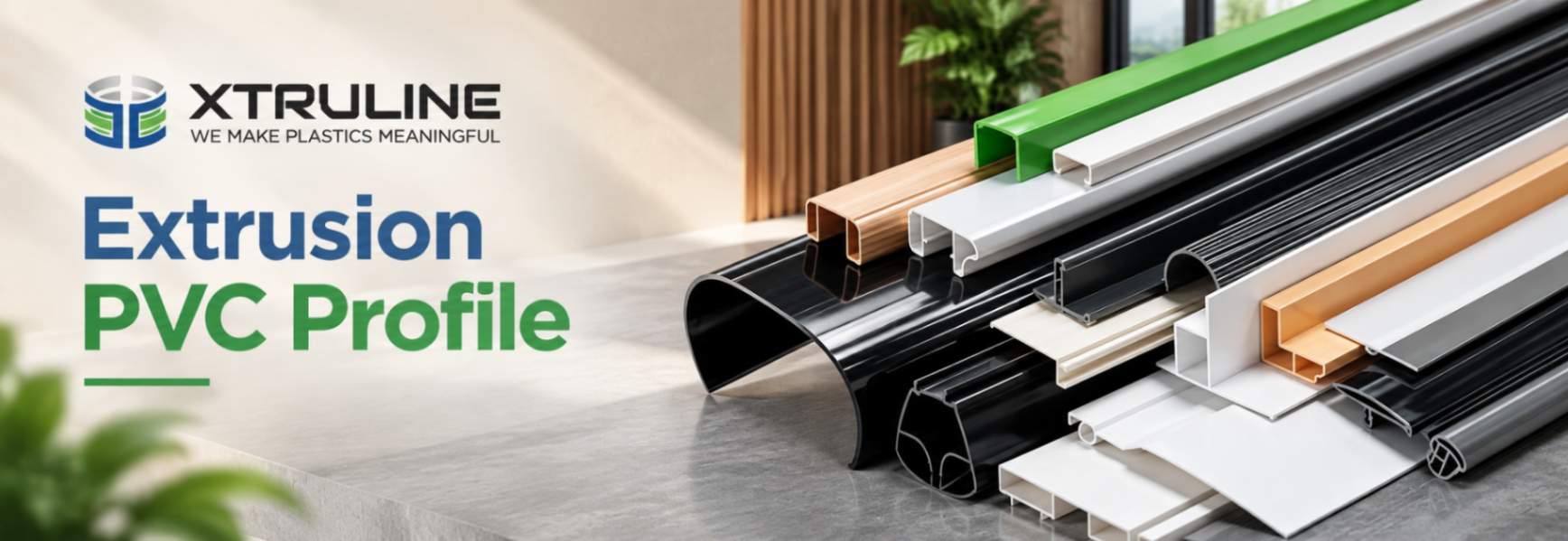
What Is an Extrusion PVC Profile? Types, Benefits & Applications | Xtruline
Introduction
PVC profiles have become an important part of modern manufacturing, construction, interiors, electrical systems, and many other industries. From protective trims and sealing channels to customized structural components, these profiles offer a practical combination of durability, flexibility, and cost efficiency.
But what exactly is an extrusion PVC profile, how is it manufactured, and where can it be used?
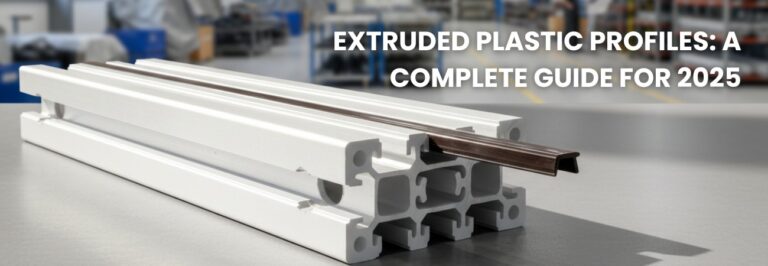
An extrusion PVC profile is a shaped component produced by forcing heated PVC material through a specially designed die. The process allows manufacturers to create profiles in consistent shapes, sizes, and finishes according to specific application requirements.
With growing demand for lightweight and durable plastic components, businesses are increasingly looking for reliable PVC profile manufacturers that can deliver consistent quality and customized solutions.
What Is an Extrusion PVC Profile?
An extrusion PVC profile is a continuous PVC product manufactured through an extrusion process. PVC, or polyvinyl chloride, is heated until it reaches a workable state and then pushed through a die that determines the profile’s shape.
Once the material exits the die, it is cooled, calibrated, and cut into required lengths.
This manufacturing method makes PVC suitable for producing a wide range of profiles, including channels, trims, guides, frames, seals, and other customized components.
The major advantage is consistency. When the right material formulation, tooling, and production controls are used, manufacturers can produce long lengths of profiles with uniform dimensions and reliable performance.
How Does PVC Profile Extrusion Work?
The PVC profile extrusion process generally involves several important stages:
1. Material Preparation
PVC resin is combined with suitable additives to achieve the required properties. Depending on the application, additives can influence characteristics such as flexibility, color, UV resistance, impact strength, and surface appearance.
2. Heating and Extrusion
The prepared PVC compound enters an extruder, where controlled heat and mechanical pressure transform it into a workable material.
The material is then pushed continuously through a customized die.
3. Profile Formation
The die gives the material its final cross-sectional shape. This is one of the most important stages because the tooling directly influences dimensional accuracy and profile consistency.
4. Cooling and Calibration
After leaving the die, the hot profile is cooled and calibrated to maintain its required dimensions and shape.
5. Cutting and Finishing
The continuous profile is cut into specified lengths. Additional finishing processes may be carried out depending on the application and customer requirements.
This controlled process enables PVC extrusion profiles to be manufactured for both standard and specialized applications.
What Are the Different Types of PVC Extrusion Profiles?
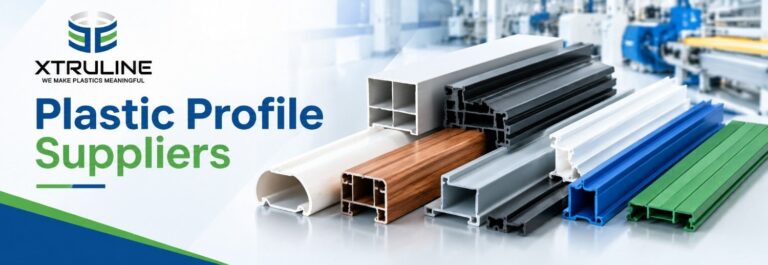
PVC extrusion profiles can be developed in many different designs depending on their intended use.
Some commonly manufactured types include:
- PVC channels
- PVC trims
- PVC edge profiles
- PVC sealing profiles
- PVC framing profiles
- PVC protective profiles
- PVC decorative profiles
- PVC industrial profiles
- PVC electrical profiles
- Customized PVC profiles
Profiles can also be produced using rigid, semi-rigid, or flexible PVC formulations depending on the performance requirements.
For applications requiring specific dimensions or functional characteristics, customized extrusion can provide a more suitable solution than standard profiles.
Why Choose PVC Extrusion Profiles?
The popularity of PVC extrusion profiles comes from their combination of practical performance and manufacturing flexibility.
Durability
PVC profiles can provide good resistance to everyday wear and environmental exposure when the material is appropriately selected for the application.
Lightweight Construction
Compared with many traditional materials, PVC is relatively lightweight. This can simplify handling, transportation, and installation.
Design Flexibility
Extrusion technology allows manufacturers to create profiles in different shapes, dimensions, and configurations.
Low Maintenance
PVC profiles generally require limited maintenance compared with some conventional materials, making them useful for long-term applications.
Customization
One of the biggest advantages of extrusion is the ability to develop profiles according to specific dimensions, shapes, and functional requirements.
Cost Efficiency
PVC can provide a practical balance between manufacturing cost, performance, and service life for many applications.
Where Are PVC Extrusion Profiles Used?
The versatility of PVC makes extrusion profiles useful across numerous industries.
Construction
PVC profiles are used for trims, protective edges, channels, frames, sealing applications, and various architectural components.
Electrical Applications
Specially designed profiles can be used for cable management, insulation-related applications, and protective components.
Furniture and Interiors
PVC profiles can be incorporated into furniture edges, panels, decorative elements, and interior finishing systems.
Lighting
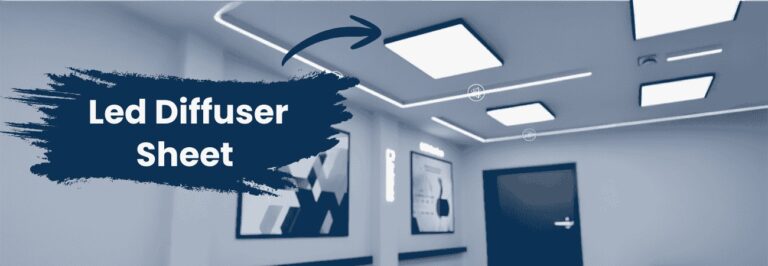
Customized profiles can support lighting-related applications, including protective and mounting components.
Industrial Manufacturing
Manufacturers use PVC extrusion profiles as functional components in machinery, equipment, assemblies, and specialized products.
Automotive Applications
Depending on the required specifications, PVC profiles can be developed for sealing, protection, finishing, and other automotive-related applications.
The exact material formulation and profile design should always be selected according to the operating environment and technical requirements.
How to Choose the Right PVC Profile Manufacturer?
Choosing among different PVC profile manufacturers requires more than simply comparing prices.
Consider the manufacturer’s:
- Extrusion capabilities
- Material expertise
- Custom tooling facilities
- Dimensional control
- Quality-testing procedures
- Production capacity
- Customization capabilities
- Finishing options
- Packaging and delivery systems
- Experience with the intended application
A capable manufacturer should be able to understand your application rather than simply manufacture a profile based on a drawing.
For customized requirements, it is also useful to discuss material grade, dimensions, tolerances, operating conditions, color, surface finish, and expected performance before production begins.
Why Choose Xtruline for PVC Profile Extrusion?
At Xtruline, the focus is on developing practical extrusion solutions for different industrial, commercial, architectural, and specialized requirements.
From profile design and material selection to extrusion and finishing, a well-planned manufacturing process can help achieve consistent results and application-specific performance.
Whether you require a standard PVC profile or a customized extrusion solution, discussing your exact requirements with an experienced manufacturer can help determine the right profile design and material specifications.
Conclusion
An extrusion PVC profile is more than a simple plastic component. Through controlled extrusion technology, PVC can be transformed into continuous profiles designed for specific dimensions, functions, and applications.
From construction and interiors to electrical, lighting, furniture, and industrial manufacturing, PVC extrusion profiles offer flexibility, durability, lightweight construction, and customization possibilities.
The right profile ultimately depends on factors such as application, dimensions, environment, material requirements, and expected performance. Working with experienced PVC profile manufacturers can make the process easier and help ensure that the final product meets the required specifications.
Looking for customized PVC profile extrusion solutions? Connect with Xtruline to discuss your profile requirements and explore a solution tailored to your application.
FAQs
An extrusion PVC profile is a continuous PVC component produced by forcing heated PVC material through a specially designed die to create a specific shape and size.
PVC extrusion profiles are used in construction, interiors, furniture, electrical applications, lighting, automotive components, and various industrial applications.
Yes. PVC profiles can be customized in terms of shape, dimensions, material formulation, color, surface finish, and other application-specific requirements.
Consider factors such as extrusion capabilities, customization options, tooling expertise, quality control, material knowledge, production capacity, and experience with your specific application.
PVC offers useful characteristics such as lightweight construction, design flexibility, durability, low maintenance requirements, and suitability for a wide range of applications.