Extruded PVC Shapes: Durable, Customizable and Cost-Effective Solutions for Modern Industries
Introduction
The versatility and cost-efficiency of extruded PVC shapes have made them an essential component across numerous industries. These specially engineered plastic profiles deliver superior performance in both standard and custom applications, ranging from construction and electrical systems to furniture, transportation, and retail displays.
As industries increasingly seek lightweight, corrosion-resistant, and low-maintenance materials, extruded PVC shapes continue to replace traditional materials such as wood, aluminum, and steel. They can be manufactured in virtually any cross-sectional design while maintaining exceptional dimensional accuracy.
In this guide, we’ll explore everything you need to know about extruded PVC shapes, including their manufacturing process, advantages, applications, customization options, and how to choose the right manufacturer.
What Are Extruded PVC Shapes?
Extruded PVC shapes are specially designed plastic profiles manufactured through the PVC extrusion process. This continuous production method creates profiles with consistent cross-sectional shapes that can be cut to any required length.
These profiles are engineered to meet a wide variety of industrial, commercial, and residential requirements. From standard PVC components to fully customized plastic profiles, extrusion technology offers virtually unlimited design flexibility.
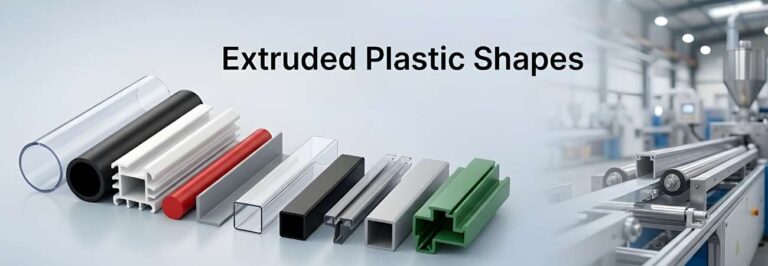
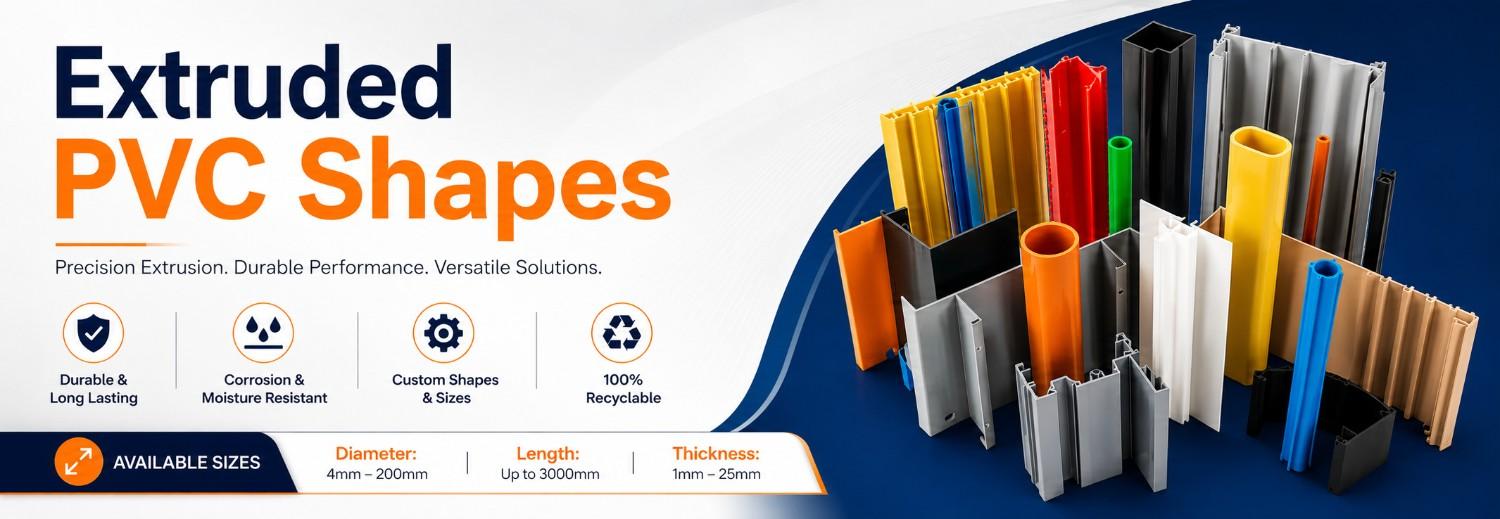
Common Types of Extruded PVC Shapes
- U-Channels
- H-Profiles
- T-Profiles
- L-Profiles
- Edge Protectors
- Corner Guards
- Trim Profiles
- Hollow Sections
- Solid Profiles
- Decorative Profiles
- Window Profiles
- Door Profiles
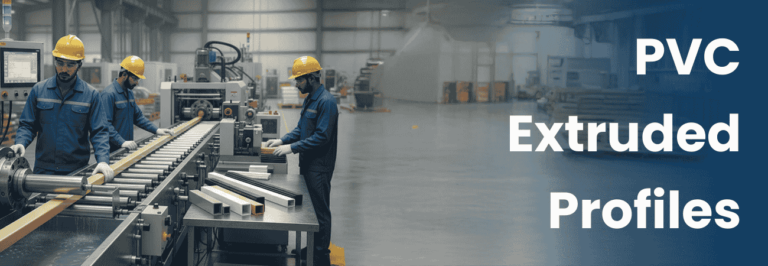
How Are Extruded PVC Shapes Manufactured?
Producing high-quality PVC profiles requires precision engineering and strict quality control throughout the manufacturing process.
1. Raw Material Preparation
PVC resin is blended with stabilizers, lubricants, pigments, UV inhibitors, and other additives to achieve the required performance characteristics.
2. Heating Process
The prepared PVC compound is fed into the extrusion machine, where it is heated under carefully controlled temperatures until it reaches the proper consistency.
3. Extrusion Through the Die
The molten PVC is forced through a specially designed die that determines the profile’s final cross-sectional shape.
4. Cooling and Calibration
The newly formed profile passes through calibration units and cooling tanks to maintain precise dimensions and shape.
5. Cutting
The continuous profile is cut into customer-specified lengths using automated cutting systems.
6. Quality Inspection
Each production batch undergoes dimensional, visual, and mechanical inspections before packaging and shipment.
Benefits of Extruded PVC Shapes
Excellent Durability
PVC profiles resist moisture, corrosion, chemicals, insects, and harsh weather conditions, ensuring long service life.
Lightweight Construction
Compared to metal alternatives, PVC profiles are significantly lighter, reducing transportation and installation costs.
High Design Flexibility
Custom extrusion allows manufacturers to produce almost any profile design for specialized applications.
Cost-Effective Manufacturing
Continuous extrusion minimizes material waste and lowers production costs.
Weather Resistance
UV-stabilized formulations maintain structural integrity and appearance even in outdoor environments.
Easy Fabrication
PVC profiles can be easily cut, drilled, welded, and assembled.
Low Maintenance
Unlike wood, PVC does not rot, warp, rust, or require painting.
Excellent Electrical Insulation
PVC offers outstanding electrical insulation, making it ideal for cable management and electrical applications.
Common Types of PVC Sections
U-Shaped Sections
Ideal for edge protection, glass installations, and panel framing.
H-Profiles
Commonly used for connecting wall panels and partitions.
T-Profiles
Suitable for floor transitions and decorative finishing.
L-Profiles
Designed for corner protection and structural finishing.
Hollow Sections
Provide excellent strength while reducing weight and material consumption.
Decorative Profiles
Widely used in furniture, interior decoration, and architectural applications.
Applications of Extruded PVC Shapes
Construction Industry
Extruded PVC profiles are widely used in:
- Window frames
- Door systems
- Ceiling panels
- Wall cladding
- Expansion joints
- Corner guards
Electrical Industry
PVC profiles provide protection and organization for:
- Cable ducts
- Wire channels
- Raceway systems
- Protective covers
Furniture Manufacturing
Common furniture applications include:
- Edge trims
- Decorative strips
- Cabinet components
- Sliding systems
Automotive Industry
PVC profiles are used for:
- Interior trims
- Weather seals
- Protective edging
- Cable management
Retail & Display Systems
Popular applications include:
- Price tag holders
- Display frames
- Shelf edging
- Signage components
Medical Equipment
PVC extrusion is suitable for manufacturing:
- Equipment housings
- Protective channels
- Instrument holders
Why Choose Custom Plastic Profiles?
Custom extruded profiles provide several important advantages over standard profiles.
Perfect Fit
Profiles are engineered specifically for their intended application.
Reduced Assembly Time
Integrated design features eliminate secondary manufacturing operations.
Improved Performance
Custom engineering enhances strength, flexibility, durability, and appearance.
Brand Differentiation
Unique profile designs help manufacturers distinguish their products.
Material Optimization
Engineered profiles reduce weight without sacrificing structural strength.
Materials Used Alongside PVC
Although PVC remains the preferred extrusion material, manufacturers also produce profiles using:
- ABS
- Polypropylene (PP)
- Polyethylene (PE)
- Acrylic
- Polycarbonate
- Nylon
- Thermoplastic Elastomers (TPE)
PVC continues to dominate due to its excellent balance of durability, performance, and affordability.
Factors to Consider When Selecting Extruded PVC Shapes
Before selecting a profile, evaluate the following:
Application Environment
Determine whether the profile will be used indoors, outdoors, or in chemically demanding environments.
Load Requirements
Choose profiles with sufficient structural strength for the intended application.
UV Exposure
Select UV-stabilized PVC for outdoor installations.
Color Requirements
PVC profiles can be manufactured in virtually any color.
Dimensional Accuracy
Precision applications require manufacturers with advanced calibration systems.
Fire Resistance
Flame-retardant PVC grades are available for specialized applications.
Sustainability of PVC Extrusion
Modern extrusion manufacturers are increasingly adopting environmentally responsible practices, including:
- Recycling production scrap
- Energy-efficient extrusion lines
- Reduced material waste
- Recyclable PVC compounds
- Long product life cycles
These initiatives help reduce environmental impact while maintaining product quality.
Quality Standards for PVC Extrusion
Reliable manufacturers maintain strict quality control through:
- Raw material inspection
- Continuous dimensional monitoring
- Mechanical strength testing
- UV resistance testing
- Surface finish inspection
- Final product verification
Consistent quality ensures reliable performance across every production batch.
Choosing the Right Extruded PVC Shapes Manufacturer
Selecting the right manufacturing partner is essential for long-term product quality and efficiency.
Look for suppliers offering:
- Advanced extrusion technology
- Custom die development
- Design assistance
- Material expertise
- Strict quality control
- Fast production timelines
- Technical support
- Consistent product availability
Working with an experienced manufacturer helps optimize design while reducing production costs.
Future Trends in Extruded Plastic Shapes
The PVC extrusion industry continues to evolve with innovations such as:
- Lightweight engineered profiles
- Smart manufacturing systems
- Recycled PVC materials
- Improved UV stabilization
- Multi-layer extrusion technology
- Precision automation
- Eco-friendly production practices
These advancements continue to expand the possibilities of custom extruded plastic profiles.
Conclusion
Extruded PVC shapes have become indispensable across industries due to their durability, versatility, cost-effectiveness, and design flexibility. Whether used as standard PVC components or custom-engineered plastic profiles, they play a vital role in construction, electrical systems, furniture manufacturing, automotive applications, retail displays, and industrial equipment.
As extrusion technology continues to advance, manufacturers can produce increasingly complex, high-performance profiles while meeting modern sustainability and quality standards. Choosing the right extrusion partner ensures products that meet exact specifications, improve manufacturing efficiency, and deliver long-term value.
FAQs
1. What are extruded PVC shapes used for?
Extruded PVC shapes are commonly used in construction, electrical systems, furniture, automotive components, retail displays, cable management, and industrial applications where durable and lightweight plastic profiles are required.
2. What is the difference between standard PVC sections and custom plastic profiles?
Standard PVC sections are pre-designed profiles available in common shapes, while custom plastic profiles are engineered to meet specific dimensions, performance requirements, and application needs.
3. Are extruded PVC shapes suitable for outdoor applications?
Yes. UV-stabilized extruded PVC shapes are designed to withstand sunlight, moisture, weather exposure, and corrosion, making them suitable for long-term outdoor use.
4. Can extruded plastic shapes be manufactured in different colors and sizes?
Yes. Manufacturers can produce extruded plastic shapes in various colors, dimensions, wall thicknesses, and custom cross-sectional designs based on project requirements.
5. Why are custom plastic profiles preferred over traditional materials?
Custom plastic profiles offer lightweight construction, corrosion resistance, design flexibility, lower maintenance, cost efficiency, and excellent durability, making them a practical alternative to wood, aluminum, and steel.