Why Choose Reliable Plastic Profile Suppliers for Your Project? | Xtruline
Introduction
When a project requires plastic components with specific dimensions, shapes, or performance requirements, choosing the right supplier can make a significant difference. Plastic profiles are used across construction, lighting, furniture, automotive, electrical, industrial, and many other applications. However, not every supplier can provide the same level of consistency, customization, or technical support.
Working with experienced plastic profile suppliers can help businesses source profiles that match their application requirements while maintaining quality and production efficiency. From standard sections to specially designed extrusion solutions, the right supplier can support projects from concept to finished product.
Understanding Plastic Profiles
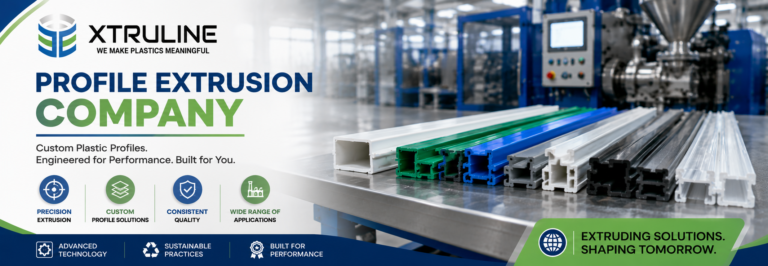
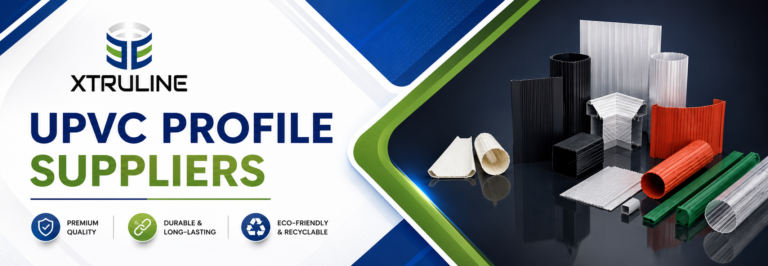
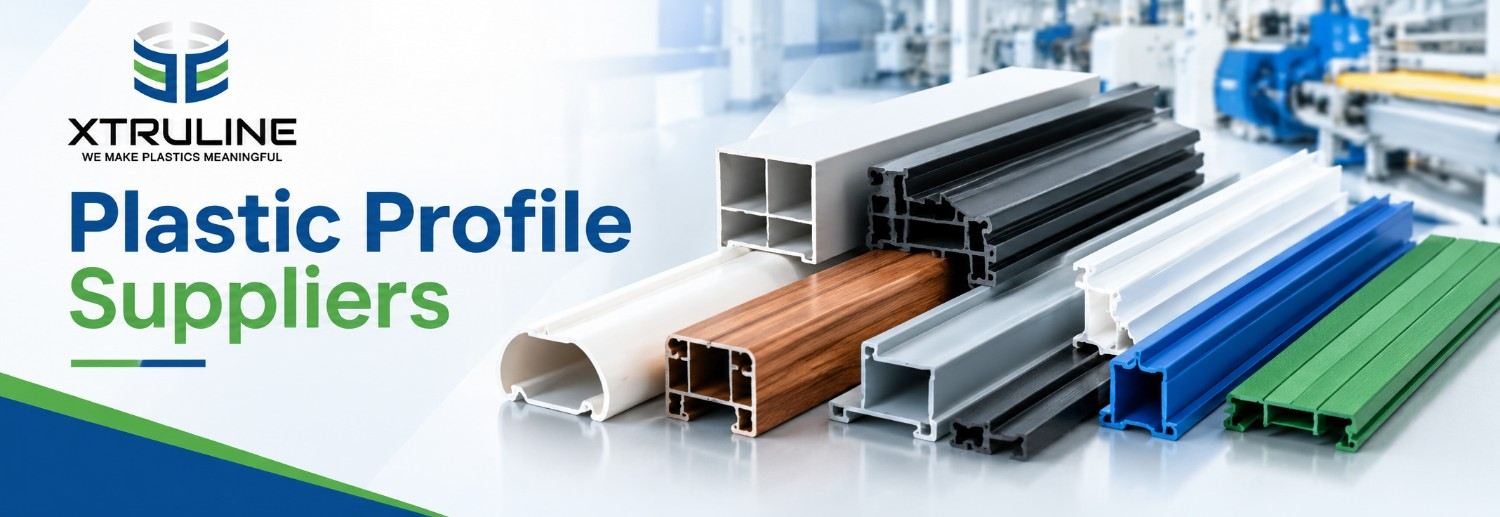
Plastic profiles are continuously extruded plastic sections manufactured in different shapes, sizes, thicknesses, and material grades. Common examples include channels, angles, tubes, trims, guides, seals, edging profiles, and protective sections.
Unlike simple molded components, profiles can be produced in long, continuous lengths, making them suitable for applications where uniformity is important. Depending on the intended use, manufacturers may work with materials such as PVC, polycarbonate, ABS, PE, and other engineering plastics.
For a project to perform properly, the profile needs to fit not only the physical dimensions but also the environmental and functional requirements of the application.
Why Supplier Selection Matters
Choosing among different plastic profile suppliers is not simply about comparing prices. A supplier should understand the relationship between material selection, profile design, extrusion conditions, tolerances, and the final application.
For example, a profile intended for outdoor use may need different material characteristics from one designed for an indoor decorative application. Similarly, lighting applications may require specific transparency or diffusion properties, while industrial components may require greater impact resistance or dimensional stability.
A knowledgeable supplier can help identify these considerations before production begins, reducing the possibility of costly modifications later.
PVC Extrusion Profiles for Practical Applications
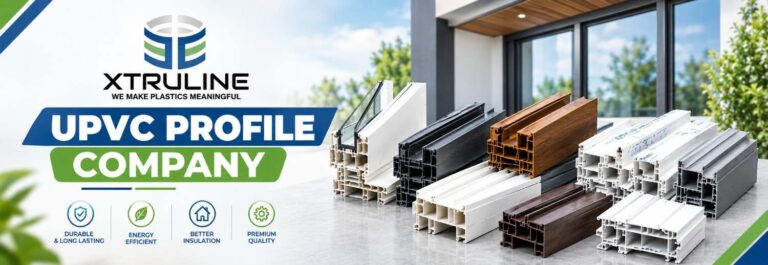
PVC extrusion profiles are widely used because PVC offers a useful combination of durability, processability, and cost efficiency. Depending on the formulation and application, PVC profiles can be designed for construction components, furniture, electrical applications, finishing systems, and other industrial uses.
The extrusion process allows manufacturers to create consistent cross-sections in continuous lengths. This is particularly useful when a project requires repeated components with the same geometry.
When selecting PVC profiles, businesses should consider factors such as hardness, color, dimensional requirements, operating environment, and intended installation method. These details help ensure that the finished profile performs reliably throughout its service life.
Custom Plastic Profiles for Specialized Requirements
Standard profiles are suitable for many applications, but some projects require a geometry that is not available from an existing catalog. This is where custom plastic profiles become valuable.
A custom profile can be developed around the exact requirements of a product or assembly. Designers can specify dimensions, wall thickness, shape, material, finish, and other characteristics based on the application.
The development process generally begins with a technical drawing, CAD design, sample, or detailed dimensional specifications. The extrusion tooling can then be developed to produce the required profile.
For businesses developing a new product, early communication with the supplier is especially useful. Discussing design limitations and manufacturing considerations before tooling can help create a profile that is practical to produce as well as suitable for the application.
Benefits of Extruded Plastic Profiles
Extruded plastic profiles offer several practical benefits for manufacturers and product designers. Their continuous manufacturing process supports consistent dimensions and efficient production of long-length components.
They can also be produced in a wide variety of shapes and material options. Depending on the requirement, profiles may incorporate features such as grooves, channels, lips, ribs, hollow sections, or interlocking elements.
Another advantage is design flexibility. A well-designed profile can sometimes combine multiple functions into one component, helping simplify assembly and reduce the number of separate parts required.
For industries working with high-volume applications, consistent extrusion quality can also contribute to smoother production and easier installation.
What to Check Before Choosing a Supplier
Before finalizing one of the available plastic profile suppliers, consider several important factors.
First, review whether the supplier has experience with the material and profile type required for your project. Technical capability is particularly important for customized designs.
Next, discuss dimensional tolerances and quality requirements. Small variations can become significant when profiles are installed across large assemblies or used with other precision components.
Material selection should also be discussed in detail. Factors such as temperature, moisture, UV exposure, chemical contact, flexibility, and mechanical loads can influence material suitability.
It is also useful to understand the supplier’s approach to prototyping, tooling, sampling, production, and quality inspection. Clear communication throughout these stages can make the development process more predictable.
Partner With Xtruline for Plastic Profile Solutions
Xtruline provides plastic profile solutions for businesses looking for dependable extrusion and customization capabilities. From standard profile requirements to application-specific designs, the focus is on developing practical solutions around the customer’s technical needs.
Whether you require PVC extrusion profiles, custom plastic profiles, or other extruded plastic profiles, discussing your drawings, dimensions, material requirements, and application with an experienced team can help establish the right production approach.
If you are comparing plastic profile suppliers for an upcoming project, Xtruline can help you explore suitable profile solutions based on your requirements.
FAQs
Plastic profiles are used in construction, lighting, furniture, electrical systems, automotive components, industrial equipment, and many other applications where continuous plastic sections are required.
Most plastic profiles are manufactured through an extrusion process. Plastic material is melted and pushed through a specially designed die to create a continuous profile with the required cross-section.
PVC extrusion profiles are continuous sections manufactured from PVC through extrusion. They can be produced in different shapes, dimensions, colors, and specifications for applications across several industries.
Yes. Custom plastic profiles can be developed according to specific drawings, dimensions, material requirements, tolerances, colors, and application needs.
Consider the supplier’s extrusion capabilities, material expertise, customization options, quality controls, tooling experience, production capacity, and ability to understand your application’s technical requirements.