Extruded Plastic Profiles: A Complete Guide for 2025
Introduction
In the modern manufacturing and construction industries, extruded plastic profiles have become essential components due to their versatility, durability, and cost-effectiveness. From window frames and door profiles to automotive parts and industrial components, extruded plastics are everywhere. This guide will help you understand everything about extruded plastic profiles, the extrusion process, and how to choose the right extrusion supplier or extrusion company for your needs.
What Are Extruded Plastic Profiles?
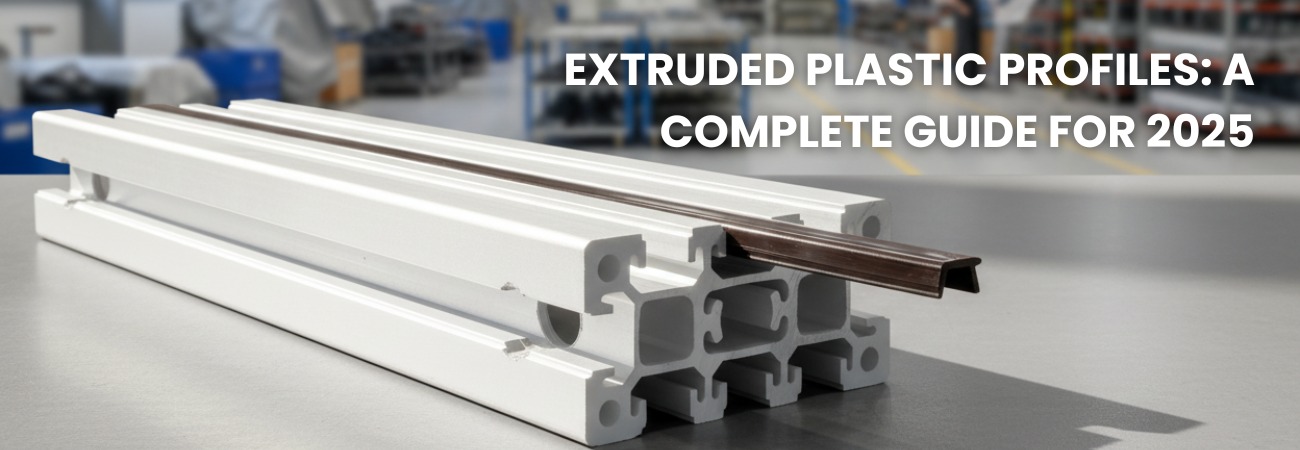
These are shapes that manufacturers create by forcing molten plastic through a specially designed die to form a continuous profile with a consistent cross-section. As a result, these profiles can vary in shape, size, and material depending on their intended application.
Key features of extruded plastic profiles:
- High precision and uniformity
- Lightweight yet strong
- Resistant to corrosion, chemicals, and UV exposure
- Customizable shapes and finishes
The Extrusion Process: How Are Plastic Profiles Made?
Understanding the extrusion process is crucial for selecting the right extrusion company. Here’s a step-by-step overview:
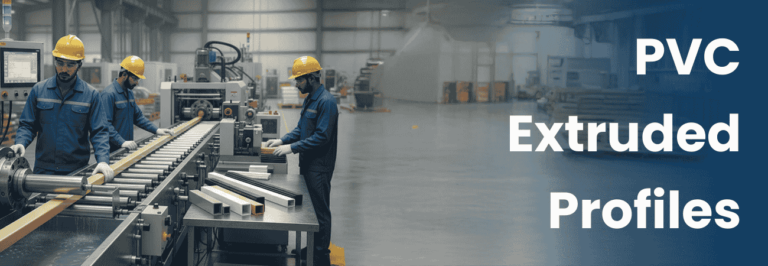
- Material Preparation – Manufacturers select and prepare raw plastic materials, such as thermoplastics like PVC, ABS, or Polycarbonate.
- Melting and Mixing – Workers feed plastic granules into an extruder, which then heats and melts them uniformly.
- Shaping Through the Die – The extruder pushes the molten plastic through a custom-designed die to form the desired shape, therefore creating the extruded section.
- Cooling and Calibration – Water baths or air cooling systems then cool the newly formed profile so it retains its shape.
- Cutting and Finishing – Finally, workers cut the profiles to the required lengths and may apply surface treatments or assemble them with other extrusion parts.
Types of Extruded Plastic Profiles
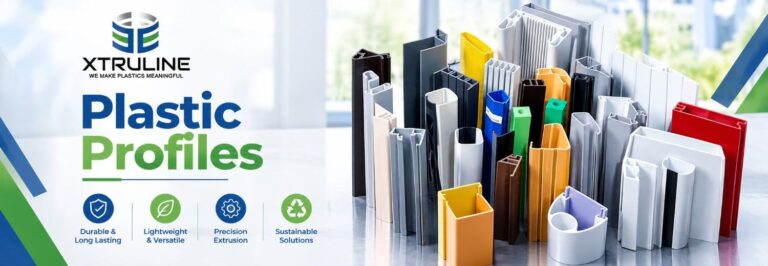
Extruded plastic profiles come in many forms, depending on their application:
1. PVC Profiles
- Common in construction (doors, windows)
- Durable, weather-resistant, low maintenance
2. ABS Profiles
- Used in automotive and electronic industries
- High impact resistance and toughness
3. Polycarbonate Profiles
- Transparent and strong
- Suitable for safety applications and roofing
4. Custom Profiles
- Designed for unique industrial or decorative applications
- Tailored by extrusion companies to exact specifications
Benefits of Using Extruded Plastic Profiles
Choosing extruded plastic profiles over traditional materials offers several advantages:
- Cost-Effective: Lower production and maintenance costs
- Lightweight: Reduces transportation and installation costs
- Durability: Resistant to environmental stressors like UV and moisture
- Design Flexibility: Allows complex shapes and customizations
- Eco-Friendly Options: Many manufacturers offer recycled or recyclable profiles
How to Choose the Right Extrusion Supplier
Selecting the right extrusion supplier or extrusion company is crucial for product quality and timely delivery. Consider the following factors:
- Experience & Expertise – Check how long the company has been in business and their technical expertise in different extrusion processes.
- Product Range – A good supplier offers a wide variety of extrusion parts and profiles to meet your project requirements.
- Quality Standards – Ensure the company follows ISO or other quality certifications for consistent performance.
- Customization Capabilities – Look for the ability to create custom extruded sections and profiles tailored to specific needs.
- Customer Support – A responsive support team ensures smooth collaboration from design to delivery.
Applications of Extruded Plastic Profiles
Industries use these profiles across multiple sectors, including:
- Construction: Windows, doors, ceiling panels, wall cladding
- Automotive: Dashboard trims, protective covers, seals
- Electrical & Electronics: Cable management systems, housings
- Furniture & Interiors: Edge trims, decorative panels
- Industrial Machinery: Conveyor belts, protective guards, custom parts
Top Tips for Maintaining Extruded Plastic Profiles
Proper maintenance ensures long-lasting performance. For instance:
- Clean regularly with mild soap and water
- Avoid abrasive cleaners that can scratch the surface
- Inspect joints and connections periodically
- Protect profiles from extreme UV exposure where possible
- Lubricate moving extrusion parts in industrial applications
Future Trends in Extruded Plastic Profiles
As industries evolve, extrusion companies are adopting new technologies, including:
Sustainable Materials: More recyclable and bio-based plastics
Advanced Coatings: UV-resistant and anti-scratch finishes
Smart Profiles: Embedded sensors or conductive plastics for electronics
Automation & AI: Improving precision and reducing production time
FAQs
Profiles of extruded plastic are used in construction, automotive, furniture, electrical, and industrial applications.
They are made by melting plastic and pushing it through a die to create a consistent shape, then cooling and cutting it to size.
An extruded section is a single shape created during the extrusion process with a uniform cross-section.
Check their experience, product range, quality standards, customization capabilities, and customer support.
Yes, they are lightweight, resistant to moisture, corrosion, and UV, making them highly durable.
Absolutely. Many extrusion companies offer tailored designs for specific industrial or decorative applications.
PVC, ABS, polycarbonate, and other thermoplastics are commonly used for different applications.
They are cost-effective, lightweight, durable, flexible in design, and often eco-friendly.