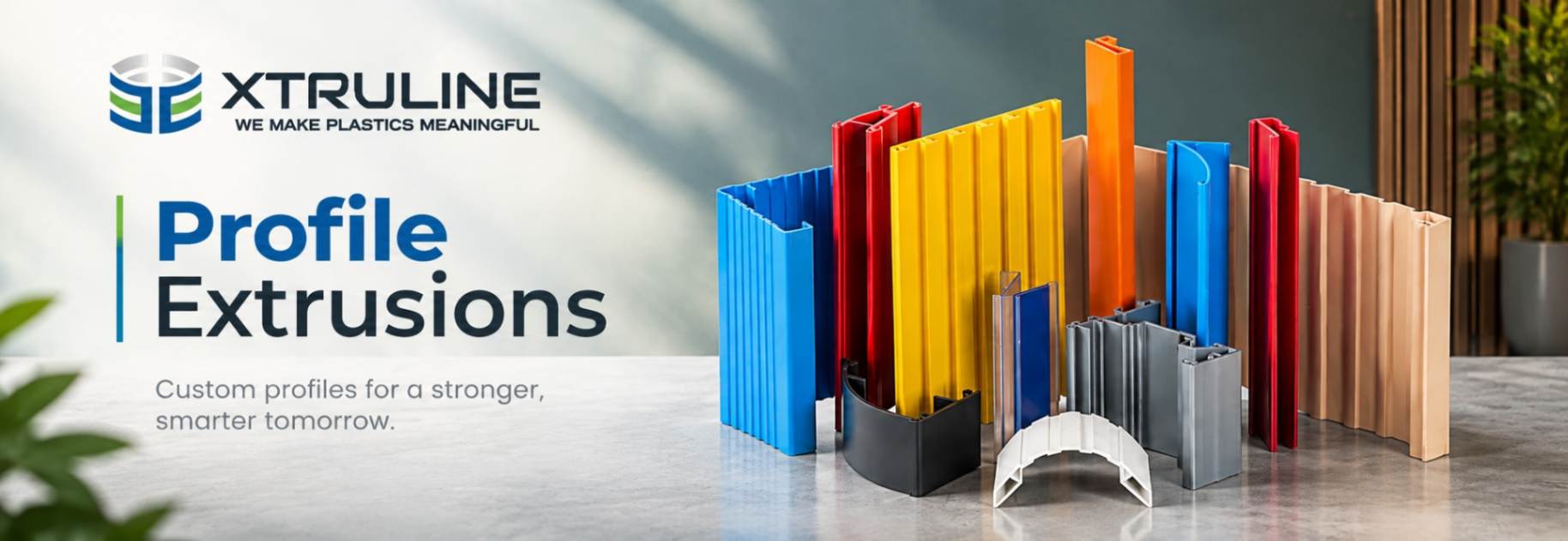
What Are Profile Extrusions? A Practical Guide to PVC and Plastic Profiles for Your Next Project
Introduction
Run your hand along a window frame, a cable channel, or the edge trim on a cabinet, and you’ve touched profile extrusions. They’re everywhere, yet most people never wonder how they’re made. If you’re a manufacturer, builder, or product designer, understanding them can save you money, time, and a few headaches.
What Are Profile Extrusions?
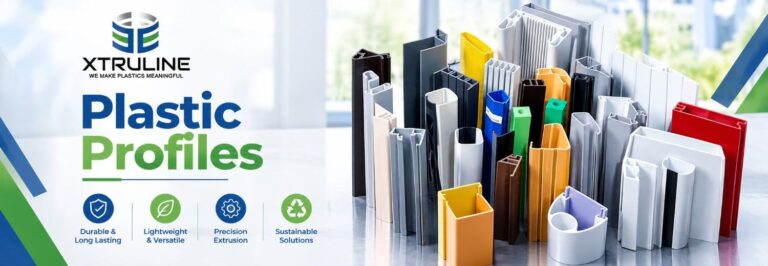
Profile extrusions are continuous plastic shapes made by pushing melted material through a shaped opening called a die. The material cools, hardens, and is cut to length. Unlike molding, which makes one part at a time, extrusion produces long, uniform lengths with the same cross-section, whether that’s a simple tube, an L-angle, or a multi-chamber design. These products are often called extrusion profiles, and the terms are used interchangeably across the industry.
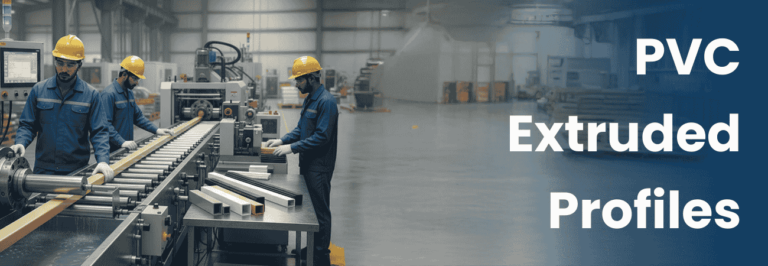
How the Extrusion Process Works
The process looks simple on paper, but precision matters at every stage:
- Material feeding: Resin, along with stabilizers, colorants, and other additives, goes into a hopper.
- Melting: A rotating screw moves the material through a heated barrel until it becomes a smooth, uniform melt.
- Shaping: The melt is pushed through a custom-designed die that gives the profile its final form.
- Cooling and calibration: The hot profile passes through a vacuum sizing tank, where water cooling locks in exact dimensions.
- Haul-off and cutting: A puller draws the profile at a steady speed, and it’s cut to your required length.
A well-designed die and a stable line speed are what separate a clean, consistent profile from one that warps or varies in thickness.
Why PVC Profile Extrusion Is So Popular
Of all the materials available, PVC profile extrusion leads the market, and for good reason:
- Durability: PVC resists moisture, chemicals, and corrosion, so it lasts outdoors.
- Low maintenance: No painting, no rusting, and easy cleaning.
- Cost efficiency: It delivers strong performance at a lower price than many alternatives.
- Design flexibility: It can be made in many colors, finishes, and shapes, including hollow sections that stay lightweight.
- Fire performance: Rigid PVC is naturally flame-retardant, which helps in building and electrical work.
- Recyclability: PVC scrap can often be reground and reused, which cuts waste.
Common Types of Extruded Plastic Profiles
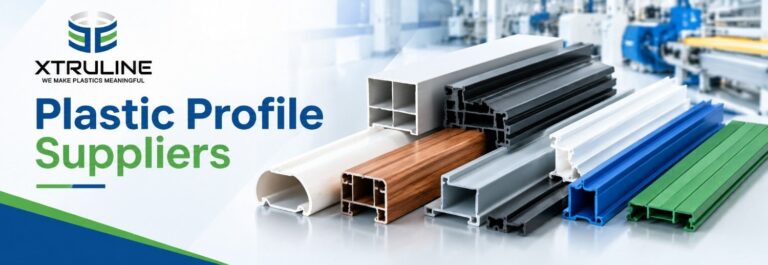
Extruded plastic profiles come in several forms, each suited to different jobs:
- Solid profiles: Strong and rigid, used for edging, rods, and structural trims.
- Hollow profiles: Lightweight, with internal chambers that add insulation and stiffness.
- Semi-hollow profiles: A balance of both, often used in channels and slots.
- Flexible profiles: Soft PVC that bends easily, used for gaskets, seals, and protective edges.
- Co-extruded profiles: Two or more materials combined in one product, such as a rigid frame with a flexible sealing strip.
Where Are Extrusion Profiles Used?
You’ll find them in more places than you might expect:
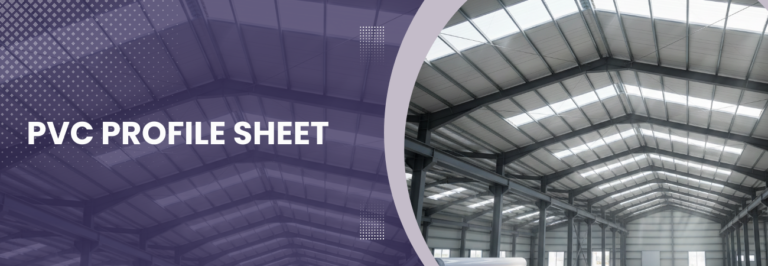
- Construction: Window and door frames, skirting, cladding, and false ceiling sections.
- Electrical: Cable trunking, conduits, and wire channels.
- Furniture and interiors: Edge banding, partition sections, and decorative trims.
- Automotive and appliances: Seals, guides, and protective strips.
- Agriculture and retail: Irrigation components, display fixtures, and shelving parts.
How to Choose the Right Extrusion Manufacturer
Not every supplier delivers the same quality. Before you commit, ask these questions:
- Do they make their own tooling?
- In-house die design speeds up changes and improves accuracy.
- What tolerances can they hold?
- Tight, consistent dimensions matter when profiles must fit other parts.
- Which materials do they offer? Look for options in grade, color, UV resistance, and flexibility.
- How do they test quality? Check for regular dimensional checks, impact testing, and batch traceability.
- Can they scale? A partner who handles both prototypes and bulk orders saves you from switching later.
- What are their lead times? Reliable delivery keeps your own production on schedule.
A Few Design Tips Before You Start
Keep wall thickness as even as possible, because uneven walls cool at different rates and cause warping. Avoid unnecessarily sharp internal corners, and share your end use early, since load, weather exposure, and fit all influence material choice. A good manufacturer will review your drawing and suggest small changes that improve strength and cut cost.
Conclusion
Profile extrusions quietly hold together much of the modern built world, and choosing the right material, design, and partner makes a real difference to how your product performs. Whether you need standard sections or a fully custom shape, the fundamentals are the same: smart design, quality material, and precise manufacturing.
Ready to bring your idea to life? Contact Xtruline today for custom profile extrusions built to your specifications. Share your drawing or requirement, and get a quote and expert guidance on the right PVC profile for your project.
FAQs
It is a manufacturing process where melted plastic is forced through a shaped die to create long, continuous products with a constant cross-section, such as channels, tubes, and trims.
PVC profile extrusion uses polyvinyl chloride, known for durability, weather resistance, and low cost. Other extrusion processes may use materials like ABS, polyethylene, or polypropylene, each with different strength, flexibility, and temperature properties.
They are used in windows and doors, cable management, furniture edging, automotive seals, appliances, and many other industries that need consistent, long-length components.
Yes. Shape, size, color, wall thickness, and material can all be customized. This is done by designing a custom die based on your drawing or sample.
With proper material formulation and UV stabilizers, PVC profiles can last decades, even outdoors. Actual life depends on the grade used, exposure conditions, and maintenance.