Why Polycarbonate Extrusion Manufacturers Are Becoming the Backbone of Modern Plastic Manufacturing
Introduction
If you’ve spent any time sourcing components for construction, signage, electronics, or industrial equipment, you’ve probably noticed one material popping up everywhere: polycarbonate. Lightweight yet tough, clear yet impact-resistant, it’s quietly become one of the most trusted materials in modern manufacturing. And behind every polycarbonate sheet, panel, or profile you come across, there’s a specialized process and a specialized team making it happen.
That’s where polycarbonate extrusion manufacturers come in. These are the companies that take raw polycarbonate resin and transform it into precise, functional shapes that power everything from greenhouse roofing to automotive components. But what actually goes into this process, and why does it matter who you choose as a manufacturing partner? Let’s break it down.
What Polycarbonate Extrusion Actually Involves
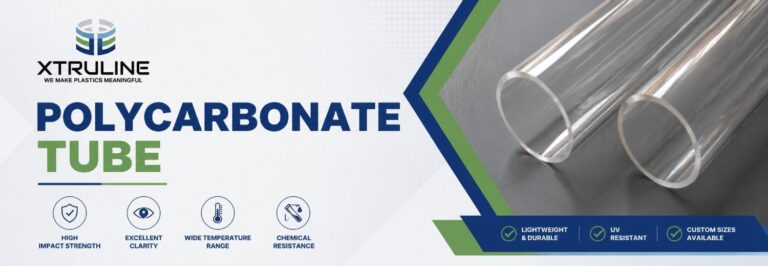
At its core, extrusion is a manufacturing process where raw plastic material is melted and forced through a shaped die to create a continuous profile with a consistent cross-section. Polycarbonate extrusion applies this same principle to polycarbonate resin, which is known for its exceptional strength-to-weight ratio, optical clarity, and resistance to impact and temperature fluctuations.
Unlike some plastics that become brittle under stress, polycarbonate holds up remarkably well which is exactly why it’s used in safety equipment, protective barriers, skylights, and even bulletproof glazing. The extrusion process has to be carefully controlled, though. Temperature, pressure, cooling rate, and die design all affect the final product’s clarity, strength, and dimensional accuracy. Get any of these wrong, and you end up with warping, stress marks, or inconsistent thickness problems that can compromise an entire project downstream.
This is precisely why the manufacturer you choose matters so much more than it might seem on paper.
Why the Right Manufacturing Partner Changes Everything
Not all extrusion facilities are built the same. Some specialize in high-volume, standardized production runs. Others are set up for custom, low-volume, highly specific projects. When you’re evaluating polycarbonate extrusion manufacturers, the real question isn’t just “can they make this shape” it’s “can they make this shape consistently, at the tolerances I need, using material that won’t degrade over time.”
A manufacturer with real process control will typically offer:
- Consistent wall thickness across long profile runs, which directly affects structural performance
- UV-stabilized and impact-modified resin options, especially important for outdoor or high-stress applications
- Tight dimensional tolerances, critical for parts that need to fit into larger assemblies
- In-house tooling and die design, which shortens lead times and allows for genuine customization rather than forcing your project into an existing mold
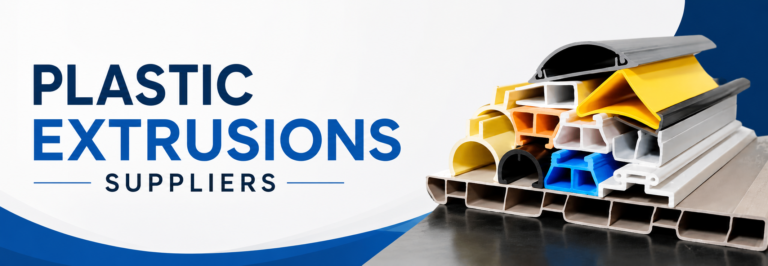
This last point is where custom plastic profile extrusion really separates strong manufacturers from average ones. If a supplier can only work with a handful of pre-made dies, you’re stuck adapting your design to their limitations. A manufacturer capable of true custom plastic profile extrusion can design tooling around your exact specifications whether that’s a unique cross-section for a construction application, a specialized channel profile for electronics housing, or a load-bearing shape for industrial racking.
Custom Extrusion: Built Around Your Application, Not the Other Way Around
There’s a growing shift in the plastics industry toward customization, and it’s not hard to see why. Off-the-shelf profiles work fine for generic applications, but as products become more specialized think modular construction systems, custom signage, or precision electrical enclosures generic shapes simply don’t cut it anymore.
This is where working with experienced custom plastic extrusion manufacturers pays off. A good custom extrusion partner doesn’t just run your design through a machine. They get involved early, reviewing your specifications, flagging potential manufacturing issues before they become costly mistakes, and suggesting design tweaks that improve both performance and cost-efficiency.
For example, a slight adjustment to wall thickness in a profile design can reduce material usage without sacrificing strength something that only becomes obvious to someone with real production floor experience. Similarly, choosing the right grade of polycarbonate resin (there are dozens, each formulated for different UV resistance, flame retardancy, or impact requirements) can make the difference between a part that lasts ten years and one that fails in two.
The Growing Demand for Polycarbonate Extrusion Services
Across industries from construction and agriculture to electronics and transportation the demand for reliable polycarbonate extrusion services has grown steadily. A few reasons stand out:
Construction and architecture increasingly rely on polycarbonate for roofing panels, skylights, and glazing because it offers glass-like clarity at a fraction of the weight and with far better impact resistance.
Agricultural applications, particularly greenhouse structures, benefit from polycarbonate’s UV stability and insulation properties, which help regulate internal temperatures while resisting yellowing over years of sun exposure.
Electronics manufacturers use extruded polycarbonate profiles for enclosures and housings, since the material offers a strong balance of durability, electrical insulation, and dimensional stability.
Signage and display industries favor polycarbonate for its optical clarity combined with resistance to cracking or shattering a major advantage over acrylic in high-traffic or outdoor environments.
As these industries continue to demand more specialized, application-specific components, manufacturers offering full-service extrusion from material selection and die design through to finishing and quality testing are becoming increasingly valuable partners rather than simple vendors.
What to Look for Before You Commit to a Manufacturer
Choosing a plastic extrusion partner is rarely just about price. Here’s what actually separates a dependable long-term partner from a risky one-off supplier:
- Material expertise — Do they understand the different polycarbonate grades and can they recommend the right one for your specific environment and load requirements?
- In-house die design and tooling — This affects both lead time and how truly “custom” your custom profile really is.
- Quality control processes — Ask about tolerance testing, dimensional inspection, and how they handle batch consistency across long production runs.
- Scalability — Can they handle a small prototype run today and a full production order six months from now without requoting or re-engineering everything?
- Communication during the design phase — The best manufacturers act as collaborators, not just order-takers.
A manufacturer that checks these boxes isn’t just producing plastic profiles — they’re reducing your risk, protecting your timeline, and ultimately making your end product better.
Conclusion
Polycarbonate extrusion sits at an interesting intersection of material science and precision manufacturing. The material itself is remarkably capable, but its real-world performance depends heavily on how well it’s processed the die design, the resin grade, the cooling process, and the quality checks along the way.
Whether you’re sourcing standard profiles or need a fully custom plastic profile extrusion solution built around a unique application, the manufacturer you partner with plays a far bigger role in your project’s success than most people realize. It’s worth taking the time to evaluate technical capability, not just price per unit.
If you’re currently exploring options for custom or standard polycarbonate extrusion, Xtruline brings hands-on manufacturing expertise, in-house tooling capability, and a genuine willingness to work through your specifications with you rather than handing you a generic catalog. Reach out to the Xtruline team to discuss your project requirements and get a manufacturing plan built around exactly what you need.
FAQs
1. What is polycarbonate extrusion used for?
Polycarbonate extrusion is used to create profiles, sheets, and custom shapes for industries like construction, signage, agriculture, and electronics anywhere impact resistance, clarity, and durability matter.
2. How is polycarbonate extrusion different from injection molding?
Extrusion produces continuous profiles with a consistent cross-section by pushing melted material through a die, while injection molding creates individual, often more complex three-dimensional parts by injecting material into a closed mold.
3. Can polycarbonate extrusion be customized for unique shapes?
Yes. Manufacturers offering custom plastic profile extrusion can design dies around specific cross-sections, allowing for shapes tailored to a particular application rather than relying on standard, pre-made profiles.
4. Is polycarbonate more durable than acrylic for outdoor use?
Generally, yes. Polycarbonate offers significantly higher impact resistance than acrylic and, when UV-stabilized, holds up well against long-term sun exposure without becoming brittle.
5. How do I choose the right polycarbonate extrusion manufacturer?
Look for in-house tooling and die design, experience with different polycarbonate resin grades, clear quality control processes, and a willingness to collaborate on your design rather than forcing you into existing molds.