What is LED Strip Profile and Why It is Important?
Introduction
LED strip lights have completely transformed modern lighting design. From sleek home interiors to commercial spaces, they are everywhere. However, there’s one essential component that often goes unnoticed: the LED strip profile. Without it, even the best LED strip can look unfinished, cause glare, or wear out faster.
In this guide, we’ll explain what an LED strip profile is, how it works, and why it’s important for durability, aesthetics, and lighting performance. Therefore, if you’re planning a modern lighting setup, understanding LED profiles is a must.
What Is an LED Strip Profile?
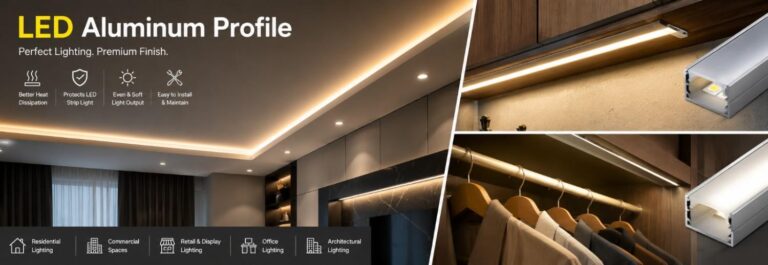
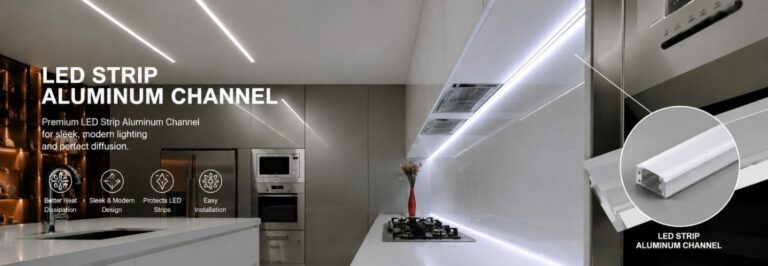
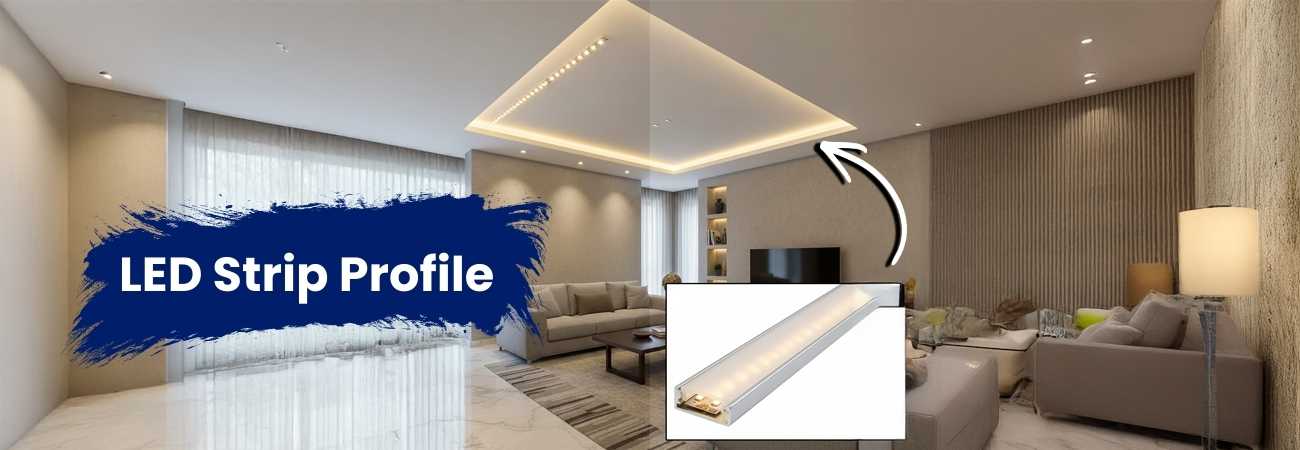
An LED strip profile (also known as an LED channel profile) is a protective housing usually made of aluminum that holds LED strip lights securely in place. It typically comes with a LED strip diffuser, which covers the LEDs and softens the light output.
LED strip profiles are designed to:
- Protect LED strips from dust and damage
- Improve heat dissipation
- Enhance light uniformity
- Give a clean, professional finish
In addition, they are widely used in ceilings, cabinets, wardrobes, staircases, display units, and architectural lighting projects.
Main Components of an LED Strip Profile
Understanding the parts of an LED profile helps you choose the right one for your project.
1. Aluminum Channel
The aluminum body acts as a heat sink and helps LEDs stay cool and last longer. This is why manufacturers prefer LED channel profiles over plastic housings.
2. LED Strip Diffuser
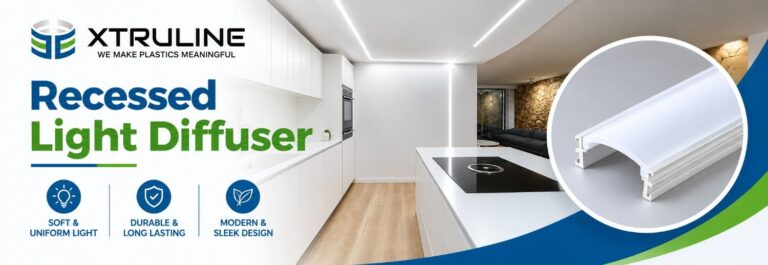
The diffuser is a translucent cover (clear, frosted, or milky) that sits over the LED strip. It softens harsh light, reduces glare, and creates smooth illumination.
3. End Caps
These seal the ends of the profile and protect the LED strip from dust and moisture.
4. Mounting Accessories
Clips or brackets allow easy installation on walls, ceilings, or furniture surfaces.
5. Connectors and Wiring Accessories
Every profile setup also needs a way to actually power the LED strip and, if you’re running multiple lengths, join the strips inside it. This includes:
- Power connectors that join the LED strip to the power supply, either via soldered wire leads or clip-on/solderless connectors.
- Strip-to-strip connectors that you use when a run needs to continue beyond a single strip length, letting you join two strip ends without soldering.
- L-shape and corner connectors that you need when a profile run changes direction, such as wrapping around a cabinet corner.
- Cable entry points/grommets for recessed or outdoor profiles. A proper cable entry point keeps the seal intact where wiring exits the channel, which matters for maintaining an IP rating on outdoor installs.
Getting the connector type right matters as much as getting the profile size right. For example, a solderless connector rated for the wrong strip density or width simply won’t make reliable contact, which shows up later as flickering or dead sections.
Types of LED Strip Profiles
Different applications require different profile designs. Here are the most common types used today:
1. Surface-Mounted LED Profiles
These fix directly onto flat surfaces like walls, shelves, or ceilings. They are easy to install and perfect for retrofit lighting projects.
2. Recessed LED Profile
Installers place a recessed LED profile inside ceilings, walls, or furniture panels, creating a flush and seamless look. This type is ideal for modern interiors and architectural lighting designs.
3. Corner LED Profiles
Designers create these for 45-degree angles, and people commonly use them in cabinets, shelves, and display units.
4. Suspended LED Profiles
These appear in commercial spaces, offices, and showrooms where linear pendant lighting is required.
Why Is an LED Strip Profile Important?
Many people install LED strips directly without a profile, but that can cause multiple issues over time. Here’s why LED strip profiles are essential:
1. Improves Heat Dissipation
LEDs generate heat, and excessive heat can reduce their lifespan. As a result, the aluminum profile draws heat away efficiently.
2. Enhances Lighting Quality
Without a profile, individual LED dots are visible and can be harsh on the eyes. Moreover, a LED strip diffuser spreads the light evenly, creating a smooth and comfortable glow.
3. Provides a Clean, Professional Finish
LED strip profiles hide wiring and uneven edges, giving your lighting installation a polished, premium appearance—especially important in modern homes and commercial interiors.
4. Protects LED Strips
Profiles protect LED strips from dust, moisture, accidental touch, and physical damage, making them ideal for kitchens, bathrooms, and high-traffic areas.
5. Extends LED Lifespan
By controlling heat, reducing exposure, and securing the strip properly, LED profiles significantly increase the overall lifespan of LED lighting systems.
Applications of LED Strip Profiles
LED strip profiles are versatile and work well in multiple environments:
- Home Interiors: false ceilings, kitchen cabinets, wardrobes, staircases
- Commercial Spaces: offices, retail stores, malls, hotels
- Architectural Lighting: wall grooves, ceiling coves, façade lighting
- Furniture & Display Units: shelves, showcases, mirrors
In addition, a recessed LED profile is particularly popular in luxury interiors due to its seamless integration.
How to Choose the Right LED Strip Profile
Selecting the right profile depends on your lighting goals and installation area.
Choose the Right Diffuser
- Clear diffuser: maximum brightness
- Frosted diffuser: balanced light output
- Milky diffuser: soft, dot-free illumination
Check LED Strip Width
Ensure the profile width matches your LED strip size to avoid fitting issues. As a quick starting point: slim 5–8 mm strips generally need a 6–8 mm profile, standard 8–10 mm strips fit a 10 mm profile, and wider 10–12 mm strips need a 12–15 mm profile. For the full width-matching table across every common strip size, see our Strip Light Channel guide.
Environment & Usage
For kitchens or bathrooms, select profiles with better protection against moisture and dust.
How a Profile Diffuser Differs from a Standalone Cover
This trips people up because the two terms get used loosely, but there’s a real distinction:
- A profile diffuser is the diffuser sold and fitted as part of a complete profile system—it’s sized and shaped to snap into that specific profile’s groove, and its diffusion level is chosen to match the profile’s typical use case.
- A standalone LED strip cover is sold separately from any specific profile and is meant to be more universal. It can sometimes be added over an already-installed strip that doesn’t otherwise have a matched profile, or used to retrofit an existing installation.
LED Strip Profile vs Direct LED Strip Installation
| Feature | LED Strip Profile | Direct LED Strip |
|---|---|---|
| Heat Management | Excellent | Poor |
| Light Uniformity | Smooth & diffused | Visible LED dots |
| Appearance | Premium & modern | Visible LED dots |
| Lifespan | Longer | Shorter |
| Protection | High | Minimal |
This comparison clearly shows why LED strip profiles are a smart investment.
Future of LED Strip Profiles in Lighting Design
With the rise of smart homes and architectural lighting trends, LED profiles are becoming an integral part of design planning. Designers now prioritize recessed LED profiles and diffused lighting to create minimal, elegant spaces. As LED technology advances, profiles will continue to play a key role in efficiency, safety, and aesthetics.
Conclusion
An LED strip profile may seem like a small component, but it plays a massive role in lighting performance, durability, and design. Whether you choose a surface-mounted option or a sleek recessed LED profile, pairing LED strips with the right LED channel profile, diffuser, and connectors ensures your lighting looks modern, professional, and long-lasting.
If you’re aiming for high-quality lighting results, never overlook the importance of LED strip profiles—they’re the foundation of perfect LED illumination.
FAQs
1. What is the main purpose of an LED strip profile?
The main purpose of an LED strip profile is to protect LED strips, improve heat dissipation, and provide smooth, glare-free lighting with a professional finish.
2. Is a LED strip diffuser necessary?
Yes, a LED strip diffuser helps soften light, reduce glare, and eliminate visible LED dots, making the lighting more comfortable and visually appealing.
3. Where should a recessed LED profile be used?
A recessed LED profile is ideal for ceilings, walls, cabinets, and furniture where a seamless, flush lighting effect is desired.
4. Can LED strip lights work without a channel profile?
LED strips can work without a profile, but they may overheat, look uneven, and have a shorter lifespan. Using an LED channel profile is always recommended.
5. What connectors do I need with an LED strip profile?
At minimum, a power connector to join the strip to your power supply. If your run spans more than one strip length, you’ll also need strip-to-strip connectors, and L-shape connectors if the profile changes direction around a corner. For outdoor or recessed installs, make sure the cable entry point is properly sealed to protect the profile’s IP rating where the wiring exits.