LED Diffuser Sheet: The Ultimate Guide for Uniform, Soft & High-Quality Lighting
Introduction
In the world of modern lighting solutions, LED diffuser sheets have become an essential component for achieving smooth, glare-free, and evenly distributed illumination. Whether you’re designing LED panels, backlit displays, signboards, or architectural lighting, choosing the right diffuser sheet can dramatically improve the overall visual output.
If you want professional-grade lighting with consistent brightness and zero hotspots, an LED diffuser sheet is the backbone of your setup. This detailed guide explains what LED diffuser sheets are, how they work, their types, thickness options, transmission specs, benefits, applications, and buying tips.
What Is an LED Diffuser Sheet?
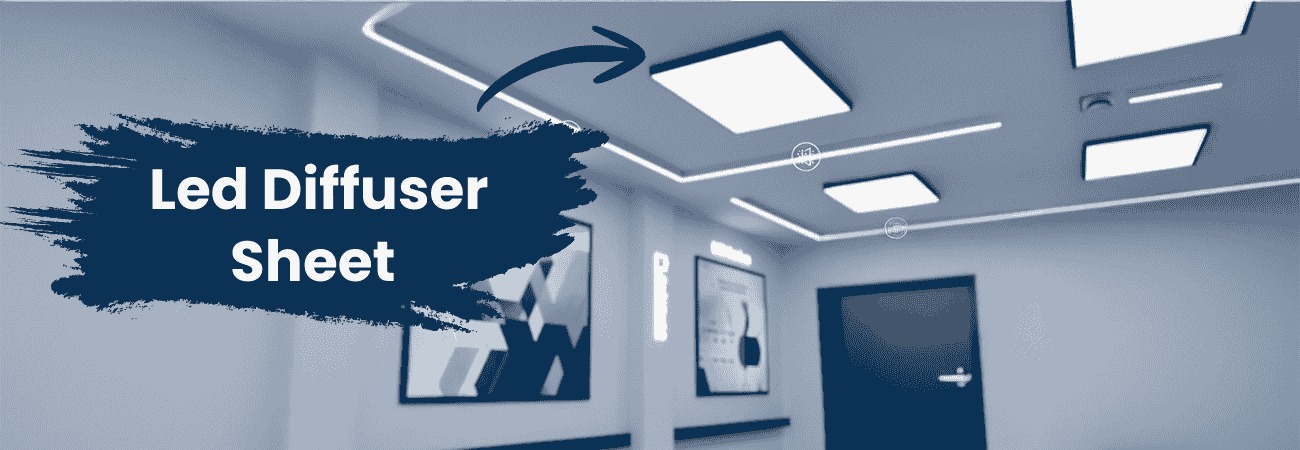
An LED diffuser sheet, also known as a light diffusion sheet or LED panel diffuser, is a specially engineered acrylic or polycarbonate sheet used to scatter light evenly across a surface. When placed in front of LED lights, it:
- Eliminates sharp shadows
- Minimizes glare
- Reduces visible LED hotspots
- Creates uniform illumination
Thanks to its optical properties, the diffuser sheet transforms point-source LED light into smooth, consistent, and visually appealing lighting suitable for both commercial and residential applications.
Why LED Diffuser Sheets Are Important
LEDs are extremely bright and directional. Without a diffuser, LED fixtures often produce:
- Harsh light
- Uneven patches
- Pixelated brightness
- Visible LED dots
This is where the LED panel diffuser plays a critical role. It works by scattering (or diffusing) the light rays as they pass through the sheet, resulting in pleasant, soft, and evenly lit surfaces.
Top Benefits of Using LED Diffuser Sheets
1. Uniform Light Distribution
The primary benefit is smooth, homogeneous lighting. The sheet eliminates hotspots, providing balanced brightness across the entire surface.
2. Enhanced Aesthetics
LED diffusers make lighting fixtures look premium and professional ideal for retail, home décor, signage, and display lighting.
3. Glare Reduction
They help reduce eye strain by scattering harsh, direct LED light.
4. Improved Energy Efficiency
With better light dispersion, you can achieve high brightness levels using fewer LEDs, reducing power consumption.
5. Durable & Long-Lasting
High-quality diffuser sheets made with acrylic or polycarbonate offer exceptional impact resistance, UV stability, and long life.
Types of LED Diffuser Sheets
Choosing the right sheet depends on application needs, transparency, and lighting intensity. The most common types include:
1. Frosted LED Diffuser Sheet
- Softens light without major brightness loss
- Popular for LED panels and cabinet lighting
2. Opal Diffuser Sheet
- Offers higher light diffusion
- Ideal for backlit boards, displays, and signage
3. Micro-Prism Diffuser Sheet
- Contains prism patterns for precision light control
- Perfect for office ceilings and advanced LED fixtures
4. Clear Diffusion Sheet
- Offers minimal diffusion and maximum brightness
- Best used where transparency is required
Micro-Prism vs. Opal: Which Performs Better?
These two get compared a lot, and the honest answer is: it depends what you’re prioritizing.
- Opal sheets diffuse light more aggressively they’re the most effective option for completely hiding individual LED points, which is why they’re the default choice for backlit signage where you can’t afford any visible dotting. The trade-off is a noticeable drop in brightness compared to clearer options.
- Micro-prism sheets use a textured prismatic surface to redirect and spread light more precisely, rather than just scattering it. This gives you strong glare control and a more even spread while keeping more of the original brightness which is why they’re common in office ceiling panels where both visual comfort and light output matter.
In short, if hiding LED dots completely is the priority (signage, decorative backlighting), go opal. If you need even light with less brightness loss (offices, task lighting, panel fixtures), micro-prism usually wins.
Applications of LED Diffuser Sheets
LED diffuser sheets are widely used across different industries:
● LED Panel Lights
Every LED panel uses a diffuser sheet to ensure even illumination and reduce shadows.
● Backlit Signage
Used in advertising boards, brand displays, and retail signs.
● Architectural Lighting
Helps create decorative lighting in ceilings, furniture, and interior partitions.
● Home Lighting
Used in LED strips, under-cabinet lighting, and cove lighting.
● Photography & Videography
Diffusers soften light to eliminate shadows and improve clarity.
● Display Technology
Essential in LCD screens, monitors, and digital signage.
Diffuser Sheet Thickness Guide (2mm / 3mm / 5mm)
Thickness affects both how the sheet diffuses light and how it holds up physically thicker isn’t automatically “better,” it depends on your fixture and LED layout.
| Thickness | Diffusion & Rigidity | Best For |
|---|---|---|
| 2mm | Lighter and more flexible, but diffuses less on its own. Needs tighter LED spacing behind it to avoid visible hotspots. | Small fixtures, lightweight panels, budget builds where LEDs are closely spaced. |
| 3mm | The most commonly used thickness, offering a practical balance of diffusion, rigidity, and weight. | General-purpose LED panels, cabinet lighting, most signage, and standard fixtures. |
| 5mm | Noticeably more rigid and diffuses more effectively at wider LED spacing, allowing fewer LEDs per panel. | Larger panels, premium signage, installations where LEDs are spaced further apart or where extra structural rigidity matters. |
How to Choose the Best LED Diffuser Sheet
When selecting a light diffusion sheet, consider the following factors:
1. Material Quality
Polycarbonate offers superior durability, while acrylic provides excellent clarity. Choose based on your lighting environment.
2. Light Transmission Percentage
Light transmission tells you how much of the LED’s output actually passes through the sheet the rest is scattered or absorbed to create that soft, even glow. As a general guide:
- Clear sheets: roughly 90%+ transmission maximum brightness, minimal diffusion.
- Frosted sheets: roughly 70–85% transmission a practical middle ground that keeps brightness while softening the light.
- Opal sheets: roughly 40–60% transmission the trade-off for near-total hotspot concealment.
- Micro-prism sheets: roughly 85–92% transmission high brightness retention with strong glare control, since the light is redirected rather than heavily absorbed.
These are typical industry ranges; exact figures vary by manufacturer and sheet thickness, so check the spec sheet for your specific product if the application is brightness-critical.
3. Heat Resistance
Necessary for high-intensity LED setups.
Why Choose Xtruline for LED Diffuser Sheets?
If you’re looking for durable, high-quality, and precision-engineered LED diffuser sheets, Xtruline is a trusted name. Their diffuser products are designed for:
- High optical clarity
- Perfect light scattering
- Long-lasting performance
- Versatile applications
Advantages of Xtruline LED Diffuser Sheets
- Strong, impact-resistant material
- Superior brightness and smooth diffusion
- Ideal for indoor and outdoor use
- Available in multiple thicknesses and sizes
If you want the best balance of quality and affordability, Xtruline is your one-stop destination.
Conclusion
LED diffuser sheets have become an essential component in modern lighting, delivering smooth, soft, and visually appealing illumination across residential, commercial, and industrial spaces. Getting the choice right comes down to three practical decisions: the diffusion type that matches your visual goal (frosted, opal, micro-prism, or clear), the thickness that suits your LED spacing and fixture size, and a transmission percentage that fits your brightness needs.
For projects that demand premium quality, durability, and superior light diffusion, choosing the right material makes all the difference. If you’re looking for reliable and high-performance LED diffuser sheets, Xtruline offers solutions tailored for LED panels, display lighting, and custom applications.
FAQs
Acrylic and polycarbonate are the most commonly used materials. Acrylic offers better clarity, while polycarbonate provides higher strength.
Yes, slightly but they increase overall visual quality by making light softer and evenly distributed.
Absolutely. They help eliminate hotspots and provide a smooth lighting effect for strips installed under cabinets or ceilings.
Yes. Without a diffuser, LED panels would show uneven brightness and visible LED dots.
Yes, they can be easily cut or shaped to fit specific lighting fixtures, signage, or architectural designs.