How Do Plastic Profile Manufacturers Deliver Custom Solutions for Modern Industries?
Introduction
Plastic components play an important role in modern manufacturing, construction, lighting, furniture, and many other industries. From window frames and protective edges to lighting covers and industrial components, plastic profiles are designed to meet different functional and aesthetic requirements. Choosing the right manufacturing partner helps businesses find products that fit their applications, maintain consistent quality, and support long-term performance.
Reliable plastic profile manufacturers understand that every project has different requirements. Some applications need flexibility, while others demand strength, dimensional accuracy, weather resistance, or a particular appearance. By combining suitable materials with modern manufacturing techniques, companies can develop profiles that match specific industrial needs.
Xtruline provides plastic profile solutions for businesses looking for practical, customized plastic components. Understanding how these products are designed, manufactured, and selected can help buyers make better decisions for their projects.
What Are Plastic Profiles and Why Are They Important?
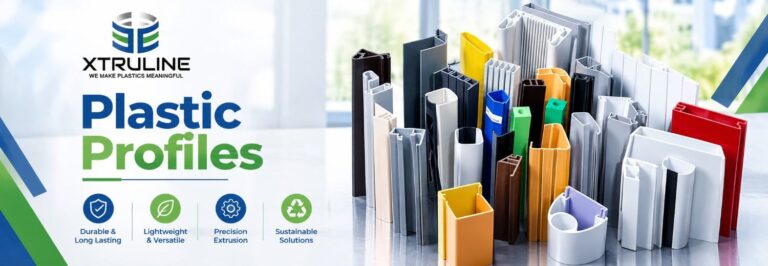
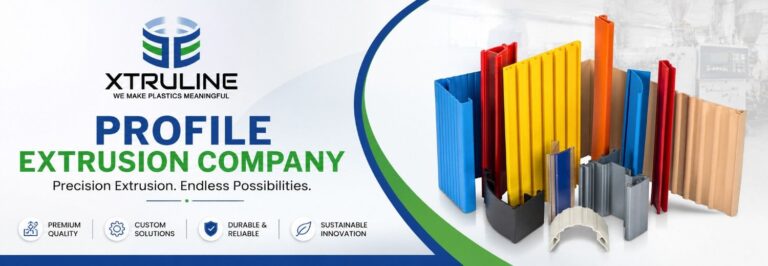
Plastic profiles are components manufactured in specific shapes and sizes to serve particular purposes. They can have simple geometries, such as rectangular strips, or more complex designs with grooves, channels, hollow sections, and multiple functional features.
These products are widely used because plastics can offer a useful combination of lightweight construction, corrosion resistance, design flexibility, and ease of installation. Depending on the material selected, a profile may also provide electrical insulation, impact resistance, or protection against moisture and environmental exposure.
For example, construction companies may require profiles for window systems, sealing applications, and interior fittings. Lighting manufacturers may need diffusers that distribute light more evenly, while industrial businesses may use plastic sections for covers, guides, and protective components.
The right profile depends on its intended use, operating environment, and performance requirements. Therefore, choosing an experienced manufacturing partner is an important step toward achieving consistent results.
How Do Plastic Profile Manufacturers Create Custom Products?
The manufacturing process generally begins with an understanding of the customer’s application. Engineers or production specialists review the required dimensions, shape, material properties, tolerances, and expected operating conditions.
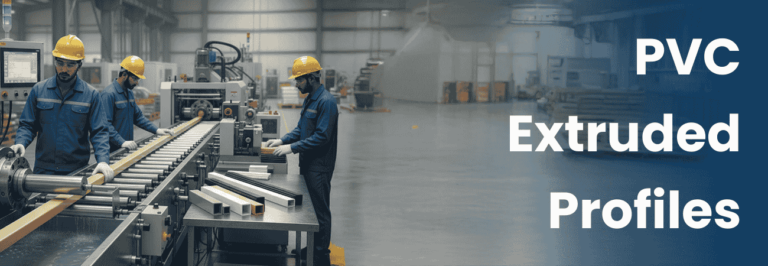
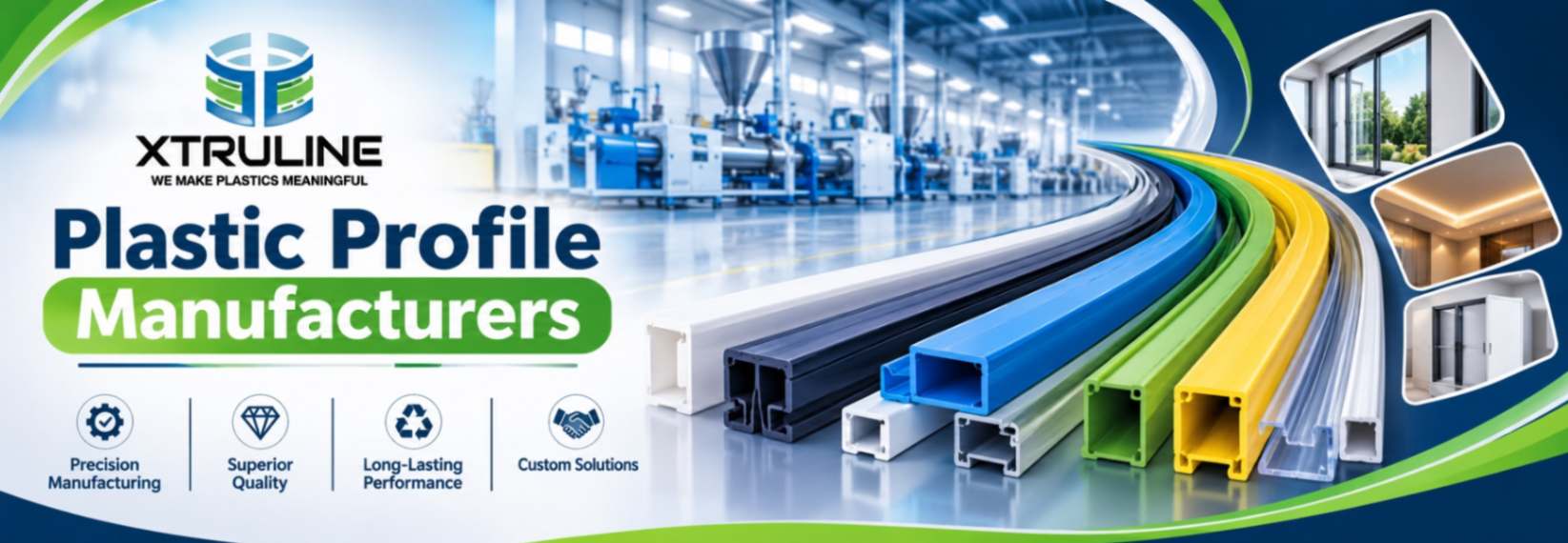
For many continuous shapes, plastic extrusion is a suitable production method. In this process, plastic material is heated until it can flow through a specially designed die. The material takes the shape of the die opening and is then cooled, calibrated, and cut to the required length.
The process can support the production of long components with consistent cross-sections. Depending on the design and material, manufacturers can produce profiles for construction, lighting, furniture, electrical systems, and industrial equipment.
Experienced plastic extrusion manufacturers also consider factors such as tooling design, production speed, cooling conditions, and dimensional stability. Proper control of these variables helps reduce defects and maintain product consistency.
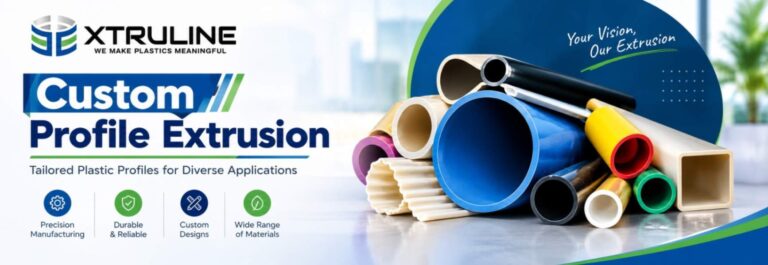
For customized projects, clear communication between the buyer and manufacturer is essential. Sharing technical drawings, samples, or detailed application requirements can help ensure that the final product meets the intended purpose.
Which Materials Are Used for Plastic Profile Manufacturing?
Material selection affects a profile’s strength, flexibility, durability, appearance, and resistance to environmental conditions. Different applications require different combinations of these properties.
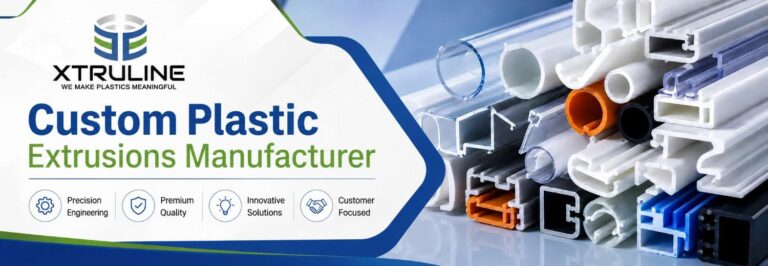
Common materials include PVC, UPVC, polycarbonate, ABS, polyethylene, and other thermoplastics. Each material has specific characteristics, making it suitable for certain applications rather than every possible use.
For instance, PVC is frequently used in building components because of its versatility and practical performance. Polycarbonate may be preferred where impact resistance or light transmission is important. ABS can be useful for selected components that require toughness and an attractive finish.
Businesses should consider the operating temperature, exposure to sunlight, contact with chemicals, mechanical loads, and applicable industry requirements before finalizing a material.
Common Materials and Their Applications
| Material | Key Characteristics | Typical Applications |
|---|---|---|
| PVC | Versatile, durable, and easy to process | Construction sections, trims, and protective profiles |
| UPVC | Rigid and suitable for many building applications | Window and door systems |
| Polycarbonate | High impact resistance and potential for light transmission | Lighting covers and protective components |
| ABS | Toughness and good surface-finish potential | Equipment housings and selected industrial profiles |
| Polyethylene | Lightweight and resistant to moisture | Protective strips and selected industrial components |
The most appropriate choice depends on the specific design, operating conditions, and required product performance.
What Should You Look for When Choosing a Manufacturer?
Selecting a manufacturing partner involves more than comparing prices. Product consistency, technical support, customization capabilities, and communication all contribute to the success of a project.
First, review the manufacturer’s experience with your product type. A company familiar with your intended application may be better prepared to understand design limitations and recommend practical improvements.
Second, evaluate its ability to manufacture the required dimensions and cross-sectional shapes. Custom tooling and process control can be especially important when profiles include intricate features or tight tolerances.
Third, discuss quality assurance. Ask how dimensions, surface appearance, material consistency, and finished-product specifications are checked during production.
Finally, consider production capacity, lead times, order quantities, and the availability of ongoing technical support. A dependable supplier should communicate clearly about project requirements and production expectations.
When comparing PVC profile manufacturers, buyers should also check whether the proposed material and finished design are appropriate for the installation environment. A well-matched product can help reduce installation difficulties and improve service life.
How Do Extruded Plastic Profiles Support Different Industries?
Applications across construction, lighting, and manufacturing
Extrusion allows manufacturers to produce continuous components in a wide variety of cross-sectional designs. This flexibility makes the process valuable across multiple industries.
In construction, profiles may be used for window and door systems, trims, seals, and finishing components. Their dimensions and material properties can be selected to suit different installation requirements.
In the lighting sector, profiles can serve as housings, covers, and diffuser components. Depending on the design, they may help protect lighting elements, improve the appearance of a fixture, or support more uniform light distribution.
Furniture manufacturers may use plastic sections for edging, inserts, and protective details. Industrial equipment producers can require profiles for guides, covers, separators, and protective channels.
Well-designed extruded plastic profiles can also simplify assembly by integrating multiple functional features into one component. This may reduce the need for separate parts and make installation more convenient.
The key is to match the profile design with the product’s actual purpose. Dimensions, material choice, and manufacturing tolerances should all be considered before production begins.
Why Choose Xtruline for Plastic Profile Solutions?
Finding a supplier that understands customized requirements can make product development more straightforward. Xtruline offers expertise in plastic profiles, tubes, sheets, and injection molding, helping businesses explore solutions for different industrial and commercial applications.
Whether a project involves a standard profile or a specially developed cross-section, defining the intended use and technical requirements is the first step toward selecting an appropriate solution.
Businesses can discuss their requirements with Xtruline, including product dimensions, material preferences, design specifications, and intended applications. This helps establish a clearer direction for developing a suitable plastic component.
When evaluating potential plastic profile manufacturers, buyers should prioritize manufacturing capabilities, consistent quality, customization options, and effective communication. These factors can support smoother project planning and better product outcomes.
Conclusion
Plastic profiles are essential components in many modern products, offering flexibility in design, material selection, and functionality. From building systems to lighting applications and industrial equipment, their usefulness depends on selecting the right material, shape, and manufacturing process.
Understanding extrusion, comparing material properties, and evaluating supplier capabilities can help businesses make informed purchasing decisions. Working with a manufacturer that understands application-specific requirements also makes it easier to develop components that meet practical performance expectations.
Looking for customized plastic profile solutions? Connect with Xtruline to discuss your requirements and explore options for your next project.
FAQs
They manufacture plastic components in specific shapes and sizes for applications such as construction, lighting, furniture, electrical systems, and industrial equipment.
Plastic profile extrusion is a manufacturing process in which heated plastic passes through a shaped die to create a continuous component with a consistent cross-section.
Common materials include PVC, UPVC, polycarbonate, ABS, and polyethylene. The right material depends on the required strength, flexibility, appearance, and environmental resistance.
Consider manufacturing experience, customization capabilities, material options, quality-control practices, production capacity, and technical support.
Yes. Manufacturers can often customize the shape, dimensions, material, color, and length according to project requirements and available production capabilities.